Replacing Lost Military Medals and Decorations
Veterans or their next of kin can request replacement military medals via form SF 180. Ensure eligibility & provide necessary details.

Why trust The Military Wallet? We’re a veteran-founded resource that has helped millions make strong financial decisions.
Advertiser Disclosure: The Military Wallet and Three Creeks Media, LLC, its parent and affiliate companies, may receive compensation through advertising placements on The Military Wallet. For any rankings or lists on this site, The Military Wallet may receive compensation from the companies being ranked; however, this compensation does not affect how, where, and in what order products and companies appear in the rankings and lists. If a ranking or list has a company noted to be a “partner,” the indicated company is a corporate affiliate of The Military Wallet. No tables, rankings, or lists are fully comprehensive and do not include all companies or available products.
The Military Wallet and Three Creeks Media have partnered with CardRatings for our coverage of credit card products. The Military Wallet and CardRatings may receive a commission from card issuers. You can read more about our card rating methodology here.
Opinions, reviews, analyses & recommendations are the author’s alone and have not been reviewed, endorsed, or approved by any of these entities. For more information, please see our Advertising Policy.
American Express is an advertiser on The Military Wallet. Terms Apply to American Express benefits and offers.
The military recognizes that military medals are often a cherished part of family history and makes replacement medals, decorations, and awards available to veterans or their next of kin if the veteran is no longer living or able to make the request on his or her own behalf.
Requests for replacement medals, decorations, and awards should be made to the veteran’s respective branch of service, with the exception of Army and Air Force (including Army Air Corps) veterans; requests should be sent to the National Personnel Records Center (NPRC) in St. Louis where the records will be reviewed and verified. The NPRC will then forward the requests to the respective service where the medal, decoration, or award will be issued.
Who Can Request Replacement Medals or Decorations?
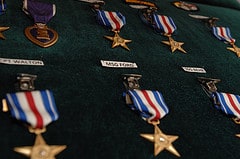 The military won’t issue replacement medals or awards to just anyone. You typically need to be the veteran or next of kin to receive a replacement medal or decoration.
Are you Next-of-Kin, or part of the general public? When it comes to military records requests, there are three categories of people who can make a request. They include the veteran, Next-of-Kin (NOK), and the general public. It is important to note that Next-of-Kin doesn’t include all familial relationships. According to the National Personnel Records Center (NPRC), NOK includes:
- For the Air Force, Navy, Marine Corps & Coast Guard, the NOK is defined as: the un-remarried widow or widower, son, daughter, father, mother, brother or sister.
- For the Army, the NOK is defined as: the surviving spouse, eldest child, father or mother, eldest sibling or eldest grandchild.
- If you do not meet the definition of NOK, you are considered a member of the general public.
How to Submit a Request
You can request replacement military medals, decorations and awards via form SF 180, Request Pertaining To Military Records. This form can be downloaded from https://www.va.gov/vaforms/.
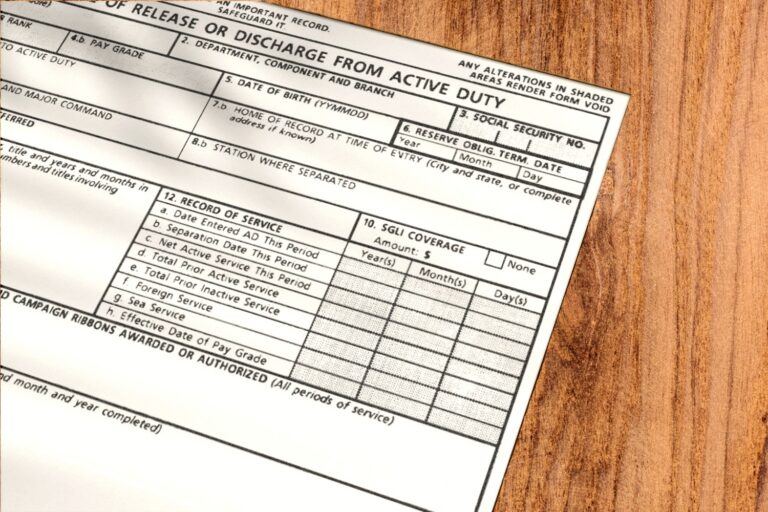
Each request should be filled out neatly, and should include the veteran’s branch of service, social security number, dates of service, and it should be signed by the veteran or the next of kin if the veteran is incapacitated or deceased. Supporting documentation such as discharge paperwork or the veteran’s DD Form 214 or other military records can help speed the process. Additional information on where to send the form and who is eligible to make the request can be found at the NPRC website.
How Much Does it Cost?
In general, military records requests made by the veteran are fulfilled at no cost. This includes requests made by family members who have the signed authorization of the veteran. There may be an associated fee for requests made by next of kin, especially if the request involves archival records (records are considered archival records 62 years after the veteran’s date of separation from military service).
Members of the general public may be able to request a copy of the servicemember’s military records, but are not able to receive a medal issued by the service. However, they would be able to purchase these from commercial sources (see below for more information on where to buy replacement military medals, rank insignia, and other military decorations).
Where Can I Get Copies of Other Military Records?
Your military personnel file is part of your legacy. I recommend maintaining a copy of your military records forever. This can help you prove your military service, help you support a VA disability claim, serve as a record of when and where you served, and provide your family with something to commemorate your military service.
Most military records are maintained at the National Archives. These records include your service contracts, separation paperwork, records of military awards, decorations, and medals, records of your duty stations, and possibly more.
The following links offer additional references for obtaining these military records:
- Request copies of military records or perform historical research (click this link for more information about pictures of servicemembers in uniform).
- Request copy of DD Form 214.
- Get a Veterans ID Card.
Where Can I Purchase Replacement Medals, Ribbons, Rank Insignia, or other Military Items?
 If you are a servicemember or retiree, you can purchase them at your base clothing sales store. Everyone else should look at military surplus stores, or any of the many online stores that specialize in military rank, insignia, medals, ribbons, uniform items, and similar military gear. A quick online search should bring up many results. It’s always a good idea to shop around for quality and price. A good place to start is USAMilitaryMedals.com, which guarantees the quality of the products they sell.
What about replacement dog tags? The military, the VA, and the National Archives do not reissue dog tags to veterans. The military does issue them to currently serving military members. This article explains how to order replacement dog tags.

Photo credit: The U.S. Army.