Does Homeowners Insurance Cover Military Gear?
Find out if your insurance covers military-issued uniforms, equipment, and personal gear, and how to protect valuable items.

Why trust The Military Wallet? We’re a veteran-founded resource that has helped millions make strong financial decisions.
Advertiser Disclosure: The Military Wallet and Three Creeks Media, LLC, its parent and affiliate companies, may receive compensation through advertising placements on The Military Wallet. For any rankings or lists on this site, The Military Wallet may receive compensation from the companies being ranked; however, this compensation does not affect how, where, and in what order products and companies appear in the rankings and lists. If a ranking or list has a company noted to be a “partner,” the indicated company is a corporate affiliate of The Military Wallet. No tables, rankings, or lists are fully comprehensive and do not include all companies or available products.
The Military Wallet and Three Creeks Media have partnered with CardRatings for our coverage of credit card products. The Military Wallet and CardRatings may receive a commission from card issuers. You can read more about our card rating methodology here.
Opinions, reviews, analyses & recommendations are the author’s alone and have not been reviewed, endorsed, or approved by any of these entities. For more information, please see our Advertising Policy.
American Express is an advertiser on The Military Wallet. Terms Apply to American Express benefits and offers.
Military gear is subject to all sorts of hazards, from deployment and PCS to everyday transportation between your home and duty station. It’s vulnerable to loss, damage, theft, and that one guy who was “just getting his stuff back.”
And whether it’s your personal gear or issued equipment, military equipment is expensive.
Your homeowners or renters insurance may cover all or part of any losses that occur. Unfortunately, deciphering coverage rules is a complex undertaking.
So what do you need to do to get and keep insurance coverage on your military gear?
What Counts as Military Gear?
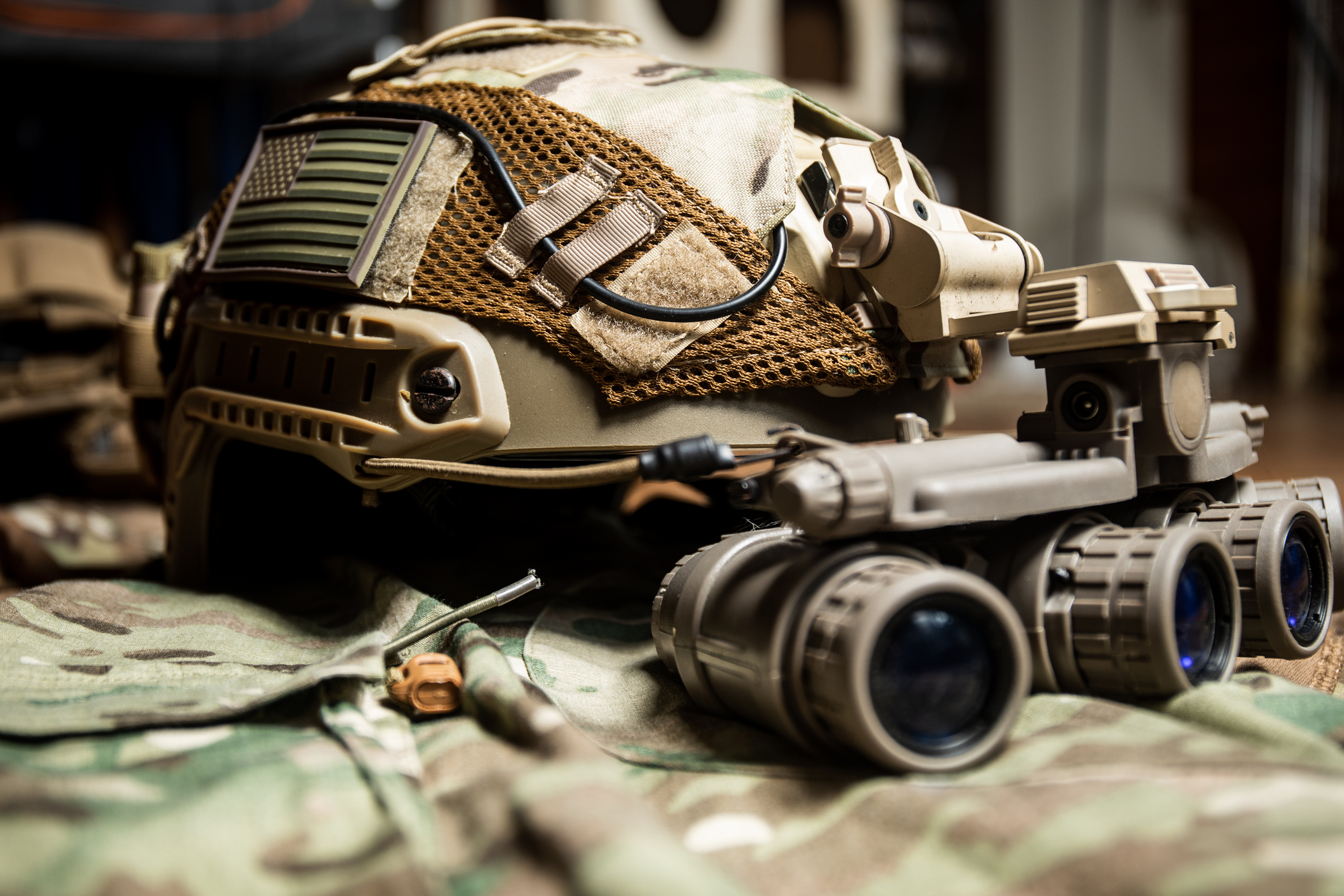
What counts as military gear? Let’s look at some categories.
Government-Issued Property (OCIE)
The gear you draw from a Central Issue Facility (CIF) and have to turn back in after PCS or ETS is known as Organizational Clothing and Individual Equipment (OCIE). You must return it to CIF clean and serviceable–in the same condition that the CIF employees allegedly issued it to you.
OCIE includes items such as rucksacks, sleeping bags, helmets, and body armor. You don’t own your OCIE but caretake it on behalf of the government.
Uniforms and Boots
Outside of your initial issue at basic training, you purchase your uniforms and boots for the duration of your career. However, if you are enlisted, the military will pay you an annual uniform allowance to cover some of these costs.
Boots and uniforms are your property, and you generally won’t have to turn these in upon leaving the service.
Other Professional Gear
Servicemembers are required to maintain OCIE and uniform items. However, you may buy additional items to make your job easier and/or more comfortable. This could include specialized ammunition pouches, extra “snivel-gear” for those long nights in the field, and even personal canteens so you don’t have to use the OCIE versions that taste like liquid death.
Since you are buying these items, they are 100% yours.
Great news! The purchase of extra military gear may be tax-deductible. Check out our guide on the topic here.
Most military families find better rates in minutes. Enter your ZIP to compare top carriers side by side — no obligation, no spam.
Does Insurance Cover Government-Issued Military Equipment?
The short answer: maybe. The long answer: if you want your insurance to cover your OCIE, you need to take steps to ensure it does.
Homeowners and renters insurance cover a lot more than you may think. For instance, when someone breaks into your car and steals your valuables, chances are one of these policies will cover the loss (as long as you have it), rather than your auto insurance, which typically covers only damage to the vehicle itself.
Property Owned by Others
By default, insurance usually only covers the property you actually own. A claim for OCIE stolen from your vehicle would likely not be paid by your property insurance because you don’t own the items. The theory is that the government should have its own insurance. Ditto with anyone else whose items are stolen: their insurance (if they have it) should cover the loss.
But the government expects you, the servicemember, to take reasonable precautions to prevent your OCIE from being stolen. This is why they always warn you not to store it in cars (even though it’s tough to get it to work otherwise). So if someone steals your OCIE, your unit will initiate a Financial Liability Investigation of Property Loss (FLIPL). If the FLIPL determines you are at fault for the loss due to negligence or any other reason, you will have to pay for all or part of the OCIE.
That’s why you want to make sure your OCIE is covered by your homeowners or renters insurance if at all possible.
The Solution
One way to ensure your equipment is covered is to add a rider or endorsement to your existing property policy.
Riders and endorsements are additions to existing policies that extend coverage on certain declared items. Many people get a rider or endorsement to cover engagement rings, since standard property insurance policies cap jewelry payouts at $1,000-$2,500.
In other cases, it makes more sense to purchase an additional valuable personal property (VPP) policy, especially if you have many items that you want to insure for higher amounts under policies that cover broader circumstances.
If you want your insurance company to cover your OCIE and other military-issued gear, talk to an agent about your possible options for a rider/endorsement or VPP insurance. The options vary by company and by state.
For instance, USAA covers military equipment, including uniforms and personal tactical gear, under its personal property plus program. State Farm offers a personal articles policy that will cover most instances of loss of covered items.
Property Not Located at Residence Listed in Policy
Another wrinkle in insurance for your military-issued gear is that most policies cap payouts for losses that occur outside the residence at a fraction of what they would otherwise cover, often at 10%. This can affect payouts on government-owned military equipment during PCS moves and deployments.
For instance, some Allstate homeowners policies restrict the maximum payment for personal property located outside of the residence to 10% of policy limits. Whether through a rider/endorsement or VPP insurance, ask your insurance company about your options for worldwide coverage at 100% of policy limits.
Replacement vs. Depreciated Cost
Finally, ask about replacement vs. depreciated cost on any items that you insure. Getting a policy that reimburses at replacement cost rather than depreciated cost is generally a better option, if available, as long as it does not cost significantly more.
What About Personally Purchased Military Gear?
For personally purchased military gear, your homeowners or renters insurance should pay out as it would for anything else you own. Reduced payouts for items not located at the covered residence will still apply, however, and you should know whether your policy will pay out replacement or depreciated costs.
Most importantly, you should be aware that many insurance companies won’t pay out for losses that occur in a war zone.
For example, State Farm homeowners policies may not explicitly cover items lost during war. That could mean that the $300 tactical flashlight you lost downrange might not be reimbursed.
With personally owned military gear, the principle is the same as with OCIE: make sure you understand the limits of your current coverage in war zone scenarios. Military members should consider obtaining coverage for personally owned military equipment, provided it is not prohibitively expensive.
How PCS Moves Complicate Coverage
PCS moves complicate coverage in several ways. First, during a military household goods (HHG) move, your OCIE and personal items may be out of your hands (and control) for months. Even during a personally procured (DITY) move, your items will be temporarily stored in vehicles and hotel rooms, where they are subject to higher rates of theft and pilferage than at your residence.
And moving exposes items to damage from mishandling and natural events, regardless of who is conducting the move.
Finally, if you aren’t careful and proactive, you could experience a coverage lapse as you move residences.
Government-Contracted HHG Moves
If a government transportation provider loses or damages your stuff, whether it’s military or personal gear, they will pay full replacement value (FRV) or fully repair your items–theoretically.
Since 2007, the military has required transportation providers to pay or repair an item that is lost or damaged during a PCS move. You must prove the value of your items and submit your claim within 9 months (12 months for shipments picked up after May 15, 2026). There are some caveats, however: maximum liability of $6 per pound, capped at $75,000. Second, the transportation provider may make an initial offer that is less than the FRV their government contract mandates they pay.
Military transportation providers have an obvious incentive to low-ball settlement offers. This puts you in the position of having to negotiate with a private transportation provider. If you are having trouble getting them to pay the FRV for your OCIE and personal military items, you may need to involve your military claims office, according to Military OneSource.
All of this can be a hassle. Having a separate policy or rider that covers your items during moves can help ensure you don’t pay out of pocket for OCIE or personal military equipment.
Updating your address as you move is crucial to make sure you have maximum coverage. Armed Forces Insurance notes that you may consider renters insurance even if you have an existing homeowners policy, depending on the circumstances of your move.
Deployment and Theft Risks
Empty homes are subject to higher rates of theft and fire. Many insurance companies don’t cover losses that occur after you leave your home vacant for more than 30 to 60 days. You may need to convert your insurance to a vacant-home policy to be fully covered.
For the stuff you take with you on deployment, USAA’s deployment insurance can cover many losses up to $2,500. This policy specifically covers military uniforms and equipment, but also other personal items, such as if “sand clogs the vents of your gaming console.”
Other companies may offer similar products, but be aware of any coverage exclusions for being in a war zone.
Common Mistakes Military Families Make
The biggest mistake military families make is not understanding the nuances of their property insurance, especially as they apply to the unique circumstances of being in the armed forces, such as PCS and deployment.
Failing to update your address in a timely manner is another huge mistake, which can affect your homeowners, renters, and even auto insurance coverage.
How to Protect Your Military Gear
Protect yourself and your finances by knowing your policy, documenting your possessions, and negotiating coverage of high-value items:
Know Your Policy
Read your policy carefully before signing. Ask insurance providers to send a draft copy of the entire policy, not just the declarations page. Read it carefully, and ask the agent about any specific exclusions that bother you.
Improper Documentation
Keep your receipts and a photographic inventory of your stuff, especially high-value items like military gear. Update these regularly and especially before higher-risk events like PCS moves and deployments.
Consider Additional Insurance for High-Value Items
Often, you can negotiate additional riders/endorsements or obtain an add-on VPP policy to mitigate any exclusions, including those that specifically affect you as a military family.
Bottom Line
Never assume your standard property insurance policy will cover your military gear. Coverage is more complicated than many families realize, with different scenarios coming into play depending on who owns the items, what caused the loss, and how much the items are worth.
Your existing policy might cover some of your loss, but it likely doesn’t cover everything. Understanding the limits of your coverage can prevent nasty surprises down the road.
Finally, you can mitigate war zones and other exclusions by adding amendments or VPP insurance. Price these out with multiple companies.
If the worst happens, you’ll be glad you did.