Does Renters Insurance Cover Military Roommates?
Does renters insurance cover roommates? Learn how policies work for shared housing situations common in the military.


Why trust The Military Wallet? We’re a veteran-founded resource that has helped millions make strong financial decisions.
Advertiser Disclosure: The Military Wallet and Three Creeks Media, LLC, its parent and affiliate companies, may receive compensation through advertising placements on The Military Wallet. For any rankings or lists on this site, The Military Wallet may receive compensation from the companies being ranked; however, this compensation does not affect how, where, and in what order products and companies appear in the rankings and lists. If a ranking or list has a company noted to be a “partner,” the indicated company is a corporate affiliate of The Military Wallet. No tables, rankings, or lists are fully comprehensive and do not include all companies or available products.
The Military Wallet and Three Creeks Media have partnered with CardRatings for our coverage of credit card products. The Military Wallet and CardRatings may receive a commission from card issuers. You can read more about our card rating methodology here.
Opinions, reviews, analyses & recommendations are the author’s alone and have not been reviewed, endorsed, or approved by any of these entities. For more information, please see our Advertising Policy.
American Express is an advertiser on The Military Wallet. Terms Apply to American Express benefits and offers.
It’s so common, it’s almost a cliché. Two or more military friends become roommates, perhaps on base or maybe in an apartment or house off base.
There’s a whole lot to recommend these arrangements. Besides bonding and building camaraderie, it’s practical, typically with real savings to all parties’ costs of living.
But what happens if there’s a fire, burglary, or bodily damage to a visitor who has an accident on the premises? Will the renters insurance policy stump up, protecting everyone?
Does Renters Insurance Cover Roommates?
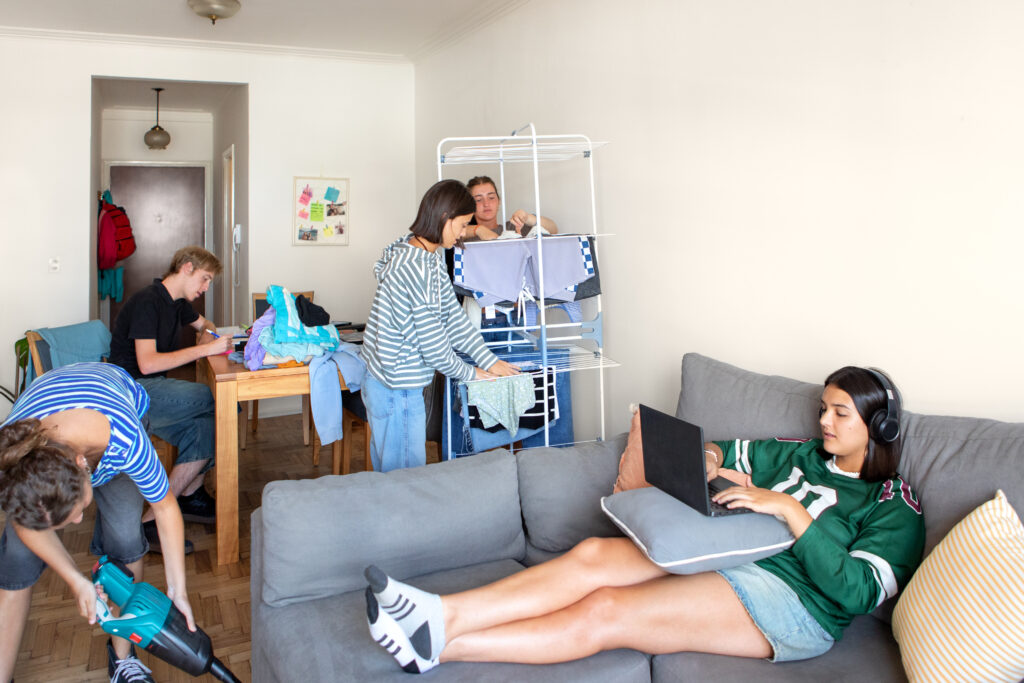
Not necessarily; a standard renters insurance policy protects only “the insured.” That’s usually (but not always) the policyholder: the person named on the policy who typically pays the premiums.
So, suppose John and Jim share an off-base apartment, which is wholly consumed by a devastating fire. If John’s is the only name on the policy, he should get the protection of the insurance, including replacement of his lost belongings and help with the costs of temporary accommodation. Jim gets zilch.
Or maybe Jennifer and Jill share a home. James visits Jill for a date and slips on water left on the bathroom floor. He hits his head on the tub on the way down and is so badly hurt that he spends two weeks in a local hospital.
To cover his medical bills, lost salary, and general damages, James sues both Jennifer and Jill. Jennifer, the insured, has her legal defense funded by her insurer, and if James wins, that insurer should compensate James, as directed by the court, up to the policy’s liability limit. Jill gets no support and is on the hook for any sums the court awards, plus her legal fees.
John and Jennifer could have protected their friends by adding Jim and Jill to their renters insurance policies. Many (but not all) companies permit this, and they’d simply have to tell their insurers to add their roommates’ names to the documentation. However, as we’ll soon discover, there can be disadvantages to that, too.
Most military families find better rates in minutes. Enter your ZIP to compare top carriers side by side — no obligation, no spam.
Who Counts as a Roommate?
A roommate in the military is the same as in civilian life: “one of two or more persons sharing the same room or living quarters,” according to Merriam-Webster.
Pro tip: Don’t call your spouse, kids, fiancé(e), or significant other your roommate. They probably won’t like it.
Military life throws up several circumstances in which having a roommate makes financial sense. The geo bachelor is a common one.
Differentiating between a roommate and a guest isn’t easy. Individual landlords and insurers likely have their own guidelines on which is which. A guest is generally a temporary visitor (e.g., weekend visitors, party attendees, out-of-town friends). Meanwhile, a roommate is a co-tenant permanently residing at the residence and typically listed on the lease.
By all means, read your lease to make sure a guest staying for weeks or longer doesn’t count as a roommate according to their definition. An unauthorized long-term guest could place you in violation of your lease, potentially creating liability issues if property damage occurs.
Geo-Bacher Roommates
The term geo-bach references the concept of military members who are “geographic bachelors” who elect to take an assignment but not move their families along with them. While the term originated during the days when there were far fewer female servicemembers, the idea applies to everyone. The Department has recently taken to referring to families as “geo-dispersed”.
Some families choose this arrangement because the posting is too brief to justify the disruptive move, to allow a child to remain in a particular school, or the military spouse in an important job. But there are plenty of others, including continuity of access to specialist healthcare.
But the military doesn’t financially support the decision for a family to geo-bach, meaning those who choose it must shoulder the extra financial burden themselves. They get only one basic allowance for housing (BAH) even though they have to maintain two homes.
Household bills quickly climb, with housing costs in particular sucking up resources.
Geo-bach arrangements need command approval if you want the government to pay you at a different BAH rate than the servicemember’s assigned duty station. Additionally, if a servicemember wishes to reside on base, where accommodation is limited, they’ll still have to pay. The amount depends on rank. If no on-base accommodation is available, servicemembers will usually rent an apartment nearby or find a roommate.
Off-base shared housing is a common choice for geo-bachers, but for many other servicemembers, too. It provides a break from “the office,” and sharing with friends can be fun.
But it’s often a time when roommates need renters insurance the most. Nowadays, most privatized landlords of military housing require their tenants to have renters insurance, perhaps with minimum liability limits.
How Policies Define “The Insured”
According to Cornell Law School, “an insured is a person or organization whose life, health, or property is covered by an insurance policy. The person or organization purchasing the insurance is known as the policyholder. The policyholder and the insured are often, but not necessarily, the same person, as insurance coverage can include an insured who does not purchase insurance.”
It’s easy to imagine situations in which the insured is not the policyholder. Parents of a recruit might arrange and pay for renters insurance for their son or daughter’s first PCS. It’s the recruit who’s insured, but the parents are the policyholders.
Or maybe someone who’s both the policyholder and the insured adds a named roommate to a renters insurance policy. They’re both insured, but only one is the policyholder.
Typically, a spouse and the couple’s children are automatically covered by a renters insurance policy. Still, it’s best to name a spouse on the policy.
That’s even more important when romantic partners aren’t legally married. Chances are, an insurer won’t recognize the relationship and will deny claims on the same basis it would for any other roommate.
While defining terms, it’s worth recognizing what a household is. Cornell Law School says, “A household can be defined as those who dwell under the same residential roof and compose a family. A household is distinct and should be distinguished from a family because a household does not need to have the same financial, emotional, and social interconnection. However, a family can be a household.”
Risks of Sharing a Policy
We mentioned earlier that we’d explain some of the disadvantages of sharing a renters insurance policy. And we’ve now reached that point.
Problems can start even before the policy is in place. Suppose one roommate wants to maximize coverage by adding high limits for loss and liability, while the other prioritizes low premiums.
There’s also a potential issue with having a shared claims history. If one of you makes a claim, it goes on both (or all) your insurance records, potentially raising the cost of future coverage for all of you.
Then there can be disputes over payouts. If one has appreciably more valuable possessions than the other, but the payout has reached its cap, how do you fairly share the proceeds?
Suppose you jointly own one or more possessions with your roommate or unmarried partner. If that person isn’t named on your policy and doesn’t have their own insurance, your insurer may only pay for half of the item’s value.
Finally, liability caps can present problems. If Jennifer and Jill shared renters insurance with a $250,000 liability limit, what happens if that’s insufficient to satisfy James’s medical bills and damages plus their legal fees?
Besides saving money, often the best thing about being military roommates is hanging out and having fun with pals. The last thing you want is arguments over insurance ruining a great friendship.
Best Practice for Military Roommates
There’s a simple and obvious way to avoid roommates falling out over renters insurance: Each roommate takes out their own policy.
The benefits are clear. Each gets to:
- Choose the level of cover that suits them best
- Make a claim without affecting their roommate’s insurance history
- Receive the appropriate payout for their claim
- Select the level of liability coverage that makes them comfortable
Each receives their own documentation, clearly laying out the coverage they’ve chosen. And there are no grounds for disputes or arguments.
The Bottom Line: Don’t Assume Renters Insurance Covers Roommates
Does renters’ insurance cover roommates? Not unless the roommate is named on the policy.
Does adding a name to a shared renters insurance policy solve the problem? Sometimes. But it raises several risks that may lead to the sorts of disputes that can kill a friendship.
The cleanest, safest way for roommates to get the coverage they want and need is for each to have their own renters insurance policy.