Rising Electricity Bills Are Squeezing Military Families and AI Data Centers Won’t Help
Electricity costs have jumped nearly 50% since 2019, and military families living off base are feeling it. How the BAH gap, AI data centers, and inflation are straining military household budgets — and what resources are available to help.


Why trust The Military Wallet? We’re a veteran-founded resource that has helped millions make strong financial decisions.
Advertiser Disclosure: The Military Wallet and Three Creeks Media, LLC, its parent and affiliate companies, may receive compensation through advertising placements on The Military Wallet. For any rankings or lists on this site, The Military Wallet may receive compensation from the companies being ranked; however, this compensation does not affect how, where, and in what order products and companies appear in the rankings and lists. If a ranking or list has a company noted to be a “partner,” the indicated company is a corporate affiliate of The Military Wallet. No tables, rankings, or lists are fully comprehensive and do not include all companies or available products.
The Military Wallet and Three Creeks Media have partnered with CardRatings for our coverage of credit card products. The Military Wallet and CardRatings may receive a commission from card issuers. You can read more about our card rating methodology here.
Opinions, reviews, analyses & recommendations are the author’s alone and have not been reviewed, endorsed, or approved by any of these entities. For more information, please see our Advertising Policy.
American Express is an advertiser on The Military Wallet. Terms Apply to American Express benefits and offers.
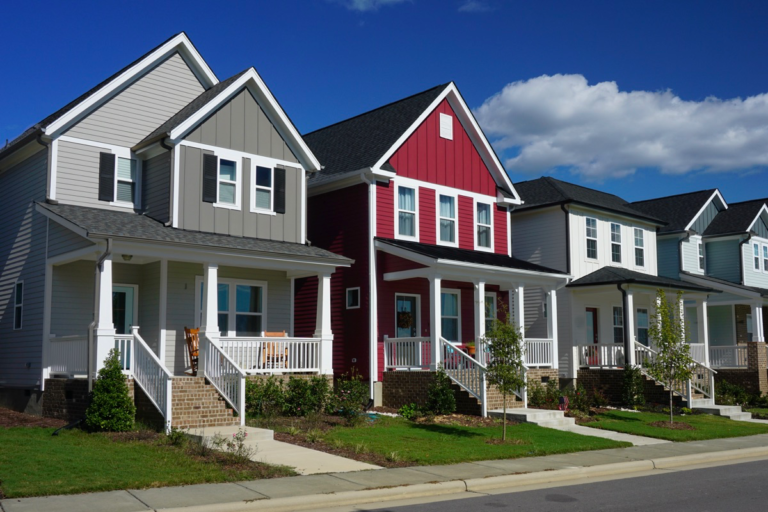
For many military families living off base, the basic housing allowance (BAH) is meant to cover the bulk of their rent and basic living costs. But as electricity prices climb and new, energy-hungry data centers expand across the country, some servicemembers and veterans are finding that what used to be a manageable expense is now becoming a strain on their monthly budget. The worry, that this is only the beginning.
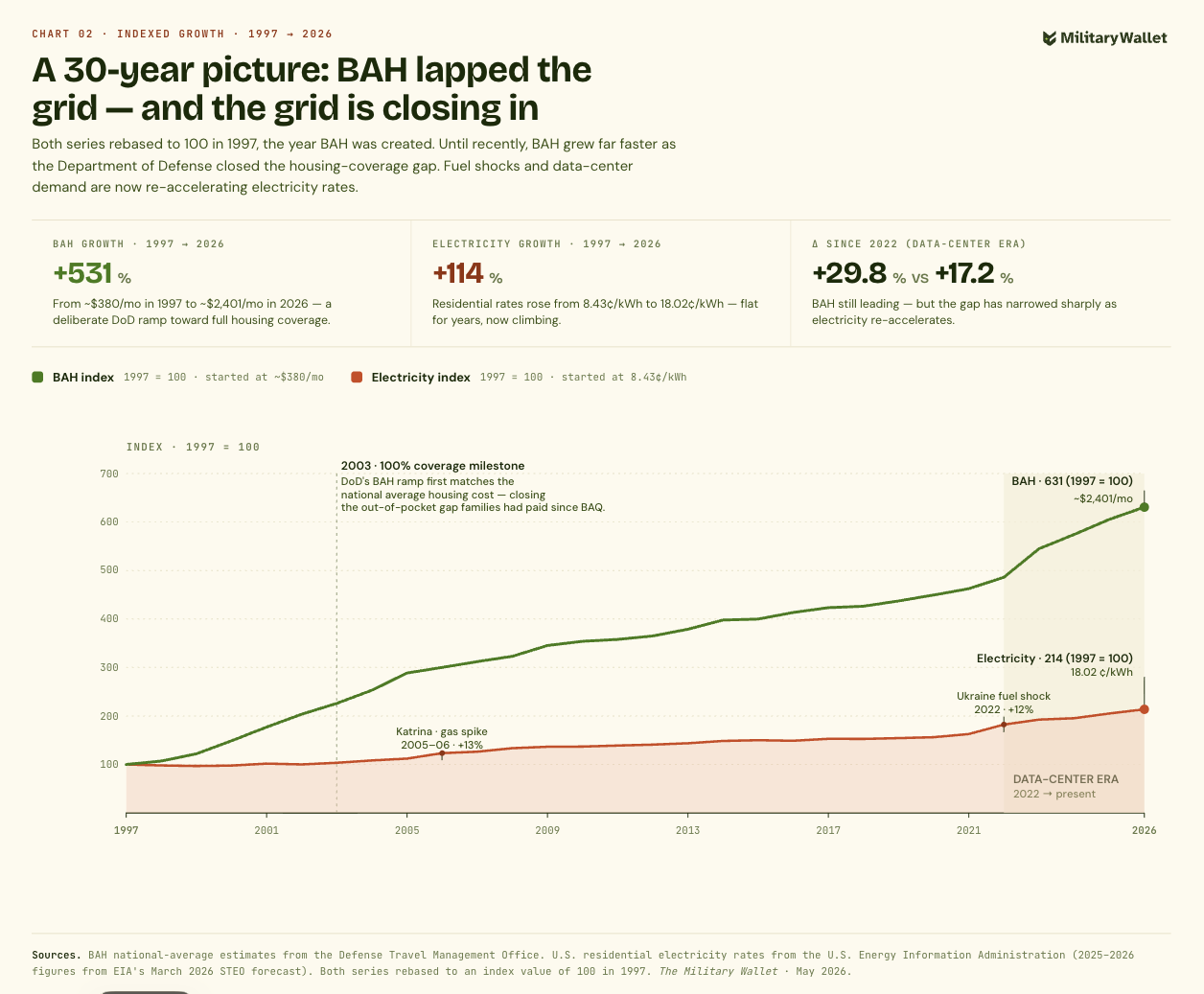
The cost of electricity has risen sharply in recent years, increasing nearly 50 percent from roughly 13 cents per kilowatt-hour in 2019 across the United States to about 19 cents in 2026, according to federal data. Overall household utility costs now average more than $4,000 annually, driven by rising energy demand, infrastructure upgrades and higher operating costs.
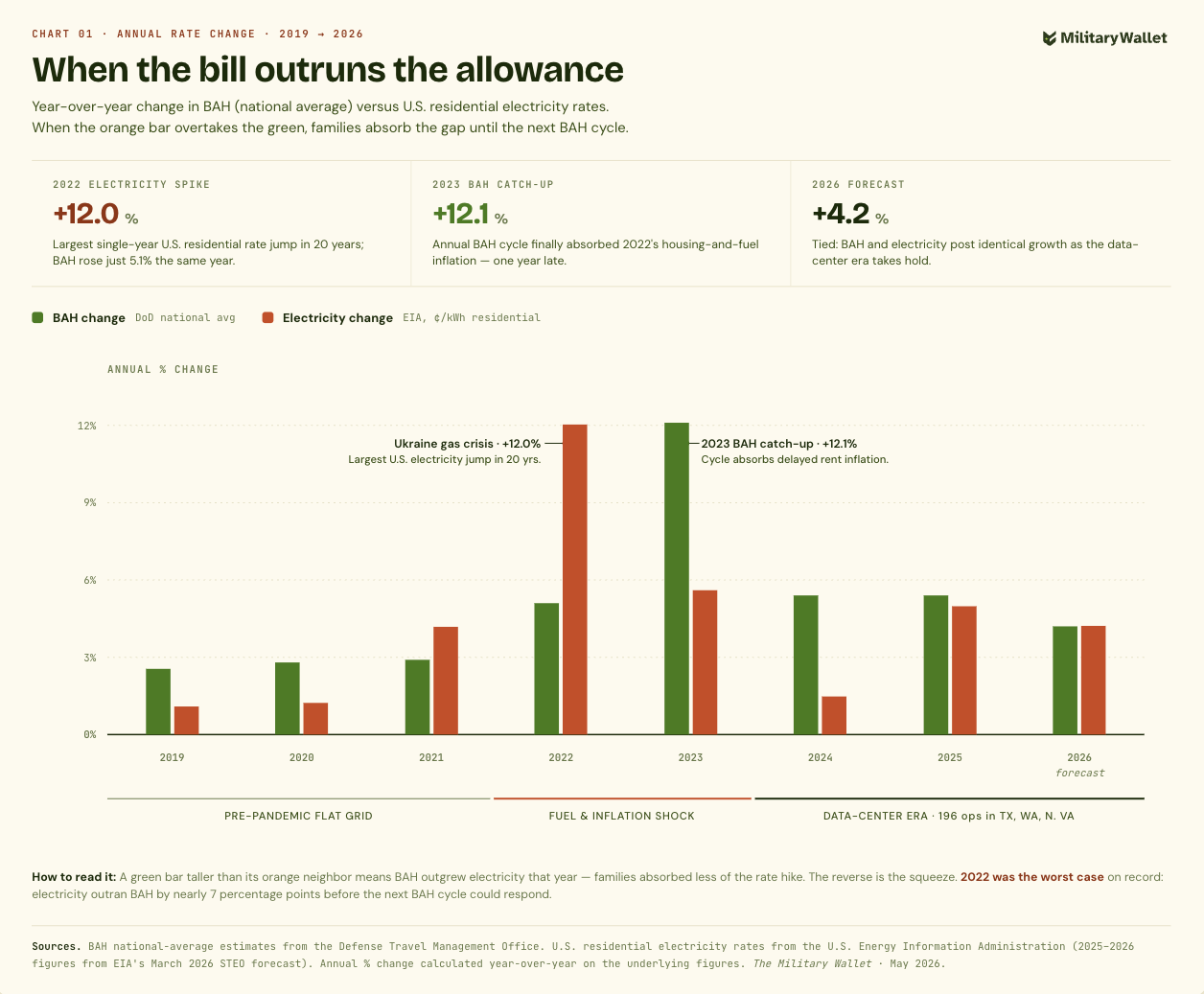
That pressure of rising costs is hitting military households in a unique way. While BAH is intended to offset housing expenses for service members living off base, it is primarily tied to housing rental markets and not to rapidly changing utility costs. As energy prices outpace adjustments to these military pay and allowances, some households may be absorbing the difference.
Data Centers
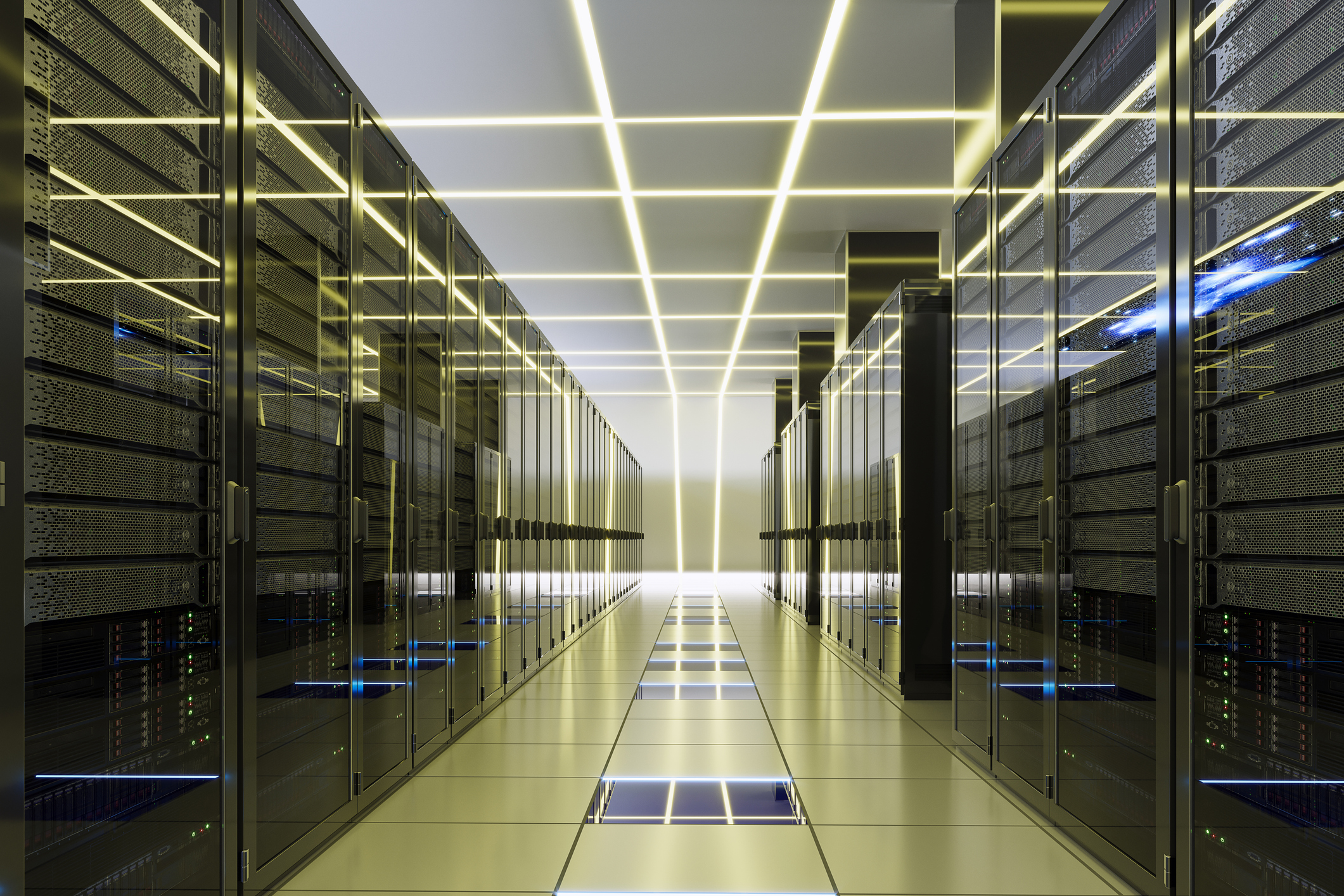
One emerging factor behind rising energy demand is the rapid expansion of data centers, such as those powering artificial intelligence systems.
The U.S. Energy Information Administration in March 2026 identified 196 companies operating data centers across Texas, Washington state, and the Northern Virginia-DC region as they work to evaluate energy consumption in data centers through pilot field studies.
These modern data centers require an enormous amount of electricity to run servers and keep them cool, and utilities are investing heavily to meet that demand. The growth of these centers, especially in regions like Virginia and Texas, is placing increasing strain on power grids in those areas.
Energy economist at UC Berkeley Dr. Severin Borenstein directed The Military Wallet to a blog he’d written on the topic where he stated that, “there is much more to the relationship between demand growth from AI data centers and your electricity rates than has gotten coverage.”
“Just as gentrifying neighborhoods raise rents for long-time residents, this new power demand boosts prices for all buyers in the energy market,” Borenstein stated in the post. “If a retail electric supplier has locked down long-term contracts, then its customers are less exposed to the scarcity, but most utilities and competitive retailers still buy much of their juice at short-term prices. And as they go into the market to sign new contracts, they are competing with all buyers, including large data centers.”
He added that while there is valid reason for concern about a short-term price spike, extensive evidence also points that supply will respond and eventually drive prices down again.
Until they are driven down, however, those costs could trickle down and be spread across a broader customer base through rate increases and infrastructure investments. That means residential users, like military families living outside of military bases, could already be feeling the impact on their monthly bills.
Military Allowance Gap
For servicemembers relying on BAH, the issue isn’t just rising costs; it’s timing.
BAH rates are updated annually and based largely on local housing rental data, with the Department of War historically aiming to cover about 95 percent of housing costs. But utilities, like electricity, can fluctuate far more frequently, and they are not directly factored into those calculations.
The result is a potential gap: as energy costs rise faster than the adjustment on housing allowances, families living off base may find themselves paying more out of pocket to maintain their same standard of living.
For U.S. Air Force Senior Master Sgt. Jana Blanchard, living north of Virginia Beach, the sting has been noticeable.
“It’s outright ridiculous, because I was paying in the hundreds, like $120-130, somewhere around there, that’s what my bill has been since I’ve gotten here,” she told The Military Wallet. “And then, the last one was $240.”
Stationed at Langley Air Force Base, Virginia, Blanchard rents a two-bedroom townhouse for herself and her dog, Chazz. She said she is gone at work most of the day, and while she’s home, her main energy consumption includes plugging in candle warmers and doing a load or two of laundry on the weekends.
“I’m girly-pop; I burn candles and then none of my lights are on when I’m home,” she said. “The only thing I’m using, really, would be the internet, and then, obviously the heat and AC.”

Jana Blanchard is stationed at Langley Air Force Base, Virginia and has experienced rising energy bills while living on BAH.
Headquartered in Richmond, Virginia, Dominion Energy provides regulated electricity service to 3.6 million homes and businesses in Virginia – including Jana’s – North Carolina, and South Carolina.
Spokesperson for the company Craig Carper told The Military Wallet that electricity demand in Dominion Energy’s service territory is growing at the fastest rate since the post World War II construction boom.
“It took our company over 100 years to reach our current average daily load of 20GW,” he said. “We will double that load in 15 years.”
Carper confirmed that data centers are driving the majority of this new demand but there are other factors at work including:
- Population growth
- Non-data center industrial growth
- Electrification
- Increasingly cold winters and hotter summers
He noted that heating and air conditioning are the largest drivers of home energy consumption.
Blanchard came to Virginia from Tampa, Florida, where she was stationed at MacDill Air Force Base. Compared to Florida, Blanchard said that this winter was “extremely cold,” but that she only bumped the heat up to 66 degrees.
“Due to the historically sustained cold winter we experienced in 2026, most of our customers’ bill totals doubled or tripled between November and January,” Carper said. “This affected customers across the board. Heating and cooling make up the single greatest percentage of customer’s bills by far and sustained extreme temperatures unavoidably increase bills.”
Questioning where the tacked-on cost could have come from, she scoured her energy bill but only noted a few minor spikes in usage throughout the month.
“Once I saw 240 I’m like, ‘Absolutely not,’” she said.
Carper said that the largest cost drivers for customers have been inflation-related including the increasing cost of grid equipment and fuel. The Virginia-based company recently adopted several key changes recommended by the state including: creating a new, higher rate class for data centers and requiring new data centers pay for 85% of their estimated usage for 14 years up front.
“The cost of capital projects are borne by all customers but the important changes mentioned have been made recently to ensure that data centers continue to pay their fair share,” Carper said. “New data centers are a leading growth factor statewide but more in Northern Virginia than other regions. However, we have to look at our grid holistically and ensure that we have enough energy for all 2.8 million customers. Customers are charged the same rates across our entire service territory, though data centers are now charged a higher rate.”
Air Force Master Sgt. Kristopher Abney is also stationed at Langley AFB and has been living there since 2018. He lives in a dual-income household with his wife and their three children.
The family noticed a spike in their energy bill over the winter months, but attributed it to their multiple holiday light displays. They said their electric bill never topped $200 this past winter.
“Unfortunately, inflation is a fact of life,” Carper said. “The cost of all goods and services in the economy go up over time. Specifically, inflation for supplies and fuel is expected to continue but the rate and extent of that inflation is hard to predict.”
Abney did mention that this family’s gas bill had exceeded $300 in one month and they weren’t as confident on the reason for the spike. They also saw their mortgage increase $250 due to real estate taxes and insurance and their water bill more than doubled over a short time period. He said those increases can really strain military households which live on a fixed income.
“If we get that blow where it’s like you’re not expecting to pay that extra $200, $300, that could really set you back,” Abney told The Military Wallet.
‘People are struggling’
Erin Pierson, community advocate and who recently ran for Senate in Green County, Pennsylvania, is doing everything she can to protest a new AI-data center coming to their area.
Land development for Project Hummingbird, which involves building a power island with the goal of attracting a hyperscale data center, was approved in December 2025. Plans for the project call for 309 acres to be disturbed in what will eventually be a 1,400-acre complex that sits along the Monongahela River.
Borenstein proposes that there are a lot of electricity network fixed and public policy costs that can be spread over more kilowatt-hours, thereby lowering the markup a utility has to charge to cover those network costs. He offered, however, that that outcome is not guaranteed.
“We’re already struggling with electric; people are struggling, blue collar America, the people who actually work for these companies, are struggling to even pay their light bills, or their water bills, and they have come to me, and I’ve helped get resources for them,” Pierson told The Military Wallet.
Resources to help
Eligibility for BAH is determined based on a service member’s rank, dependency status and duty station zip code. Any service member not residing in furnished government housing is eligible for BAH as long as they are assigned to permanent duty within the 50 United States. Service members below the rank of E-5 typically reside in barracks unless they have dependents or have been approved to live off base through unit commander endorsement and garrison commander approval of an Exception to Policy.
The BAH rates are designed to reflect demographic, economic, and housing construction changes to capture an accurate picture of true market conditions, according to the Defense Travel Management Office. While BAH rates may fluctuate up or down from one year to the next, the Department of War administers a BAH rate protection policy ensuring members do not receive a lower rate from one year to the next so long as they remain eligible for the allowance.
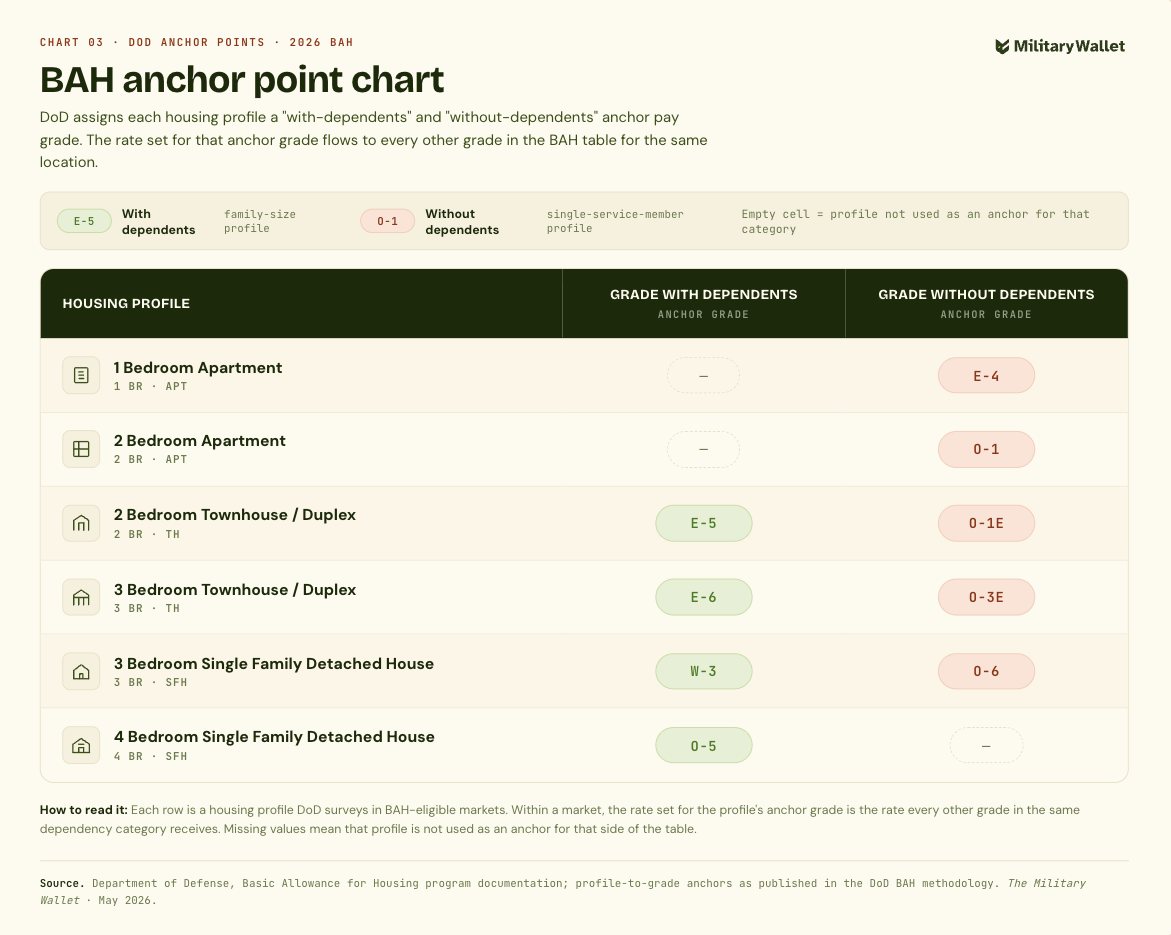
To calculate BAH for a specific zip code, anyone can use the BAH calculator on the Defense Travel Management Office. They depend on cost of living factors in each region. Rates in 2026 increased by an average of 4.2%.
There are specific military organizations aimed at helping service members and veterans facing financial crises.
- Operation Homefront offers emergency financial assistance, including utilities, for military families through partnership with donors such as Black Rifle Coffee Company, the Home Depot Fund and others.
- USA Cares helps veterans with essential bills like utilities during financial hardship.
For Dominion Energy customers, Carper said there are programs and savings tips at dominionenergy.com/savemore.
Additionally, some utilities offer direct veteran assistance grants often ranging between $500 and $1,000, or payment relief programs. Military families in need can also call the free, 24-hour national hotline 211 to connect with local aid, including utility-specific payment plans and state-run assistance programs.