Five Priceless Money Tips from the WWII Generation
The World War II generation is fading away. And with it goes a lifetime of lessons we could certainly use today. If you were to sit down with one of […]

Why trust The Military Wallet? We’re a veteran-founded resource that has helped millions make strong financial decisions.
Advertiser Disclosure: The Military Wallet and Three Creeks Media, LLC, its parent and affiliate companies, may receive compensation through advertising placements on The Military Wallet. For any rankings or lists on this site, The Military Wallet may receive compensation from the companies being ranked; however, this compensation does not affect how, where, and in what order products and companies appear in the rankings and lists. If a ranking or list has a company noted to be a “partner,” the indicated company is a corporate affiliate of The Military Wallet. No tables, rankings, or lists are fully comprehensive and do not include all companies or available products.
The Military Wallet and Three Creeks Media have partnered with CardRatings for our coverage of credit card products. The Military Wallet and CardRatings may receive a commission from card issuers. You can read more about our card rating methodology here.
Opinions, reviews, analyses & recommendations are the author’s alone and have not been reviewed, endorsed, or approved by any of these entities. For more information, please see our Advertising Policy.
American Express is an advertiser on The Military Wallet. Terms Apply to American Express benefits and offers.
1. There’s No Such Thing as “Too Frugal”
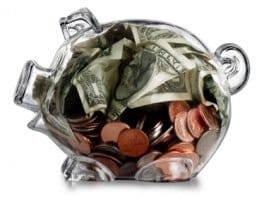 Growing up in the Great Depression, the World War II generation knew what it meant to be frugal. The difficulties they encountered pale in comparison to the recession of late.
Many didn’t have enough money for food. Every purchase was carefully considered. They were frugal because they had to be, but would likely tell you that it’s good to be frugal even when you don’t have to be. If they could’ve saved money for a rainy day, they would have. In fact, they are notorious for their frugal ways even during these times of plenty.
Growing up in the Great Depression, the World War II generation knew what it meant to be frugal. The difficulties they encountered pale in comparison to the recession of late.
Many didn’t have enough money for food. Every purchase was carefully considered. They were frugal because they had to be, but would likely tell you that it’s good to be frugal even when you don’t have to be. If they could’ve saved money for a rainy day, they would have. In fact, they are notorious for their frugal ways even during these times of plenty.
2. Work Really, Really Hard
The World War II generation understood the value of a job, and they worked very hard at the task at hand. Back in their day, they often didn’t have a wide variety of jobs to choose from. Today, typing a job search into Google will show you some results in the blink of an eye – an advantage non-existent to those living 70 years ago. Complaining was not an option. You worked hard because if you didn’t, there was someone standing in line waiting to take your position. Finding your dream job probably never came to mind; instead, finding any job was a dream come true.3. Find Contentment in What You Have
Larry, an 89-year-old, said to The Legacy Project:“Let me tell you, in the 1930s we had the Depression… We’d maybe get a nickel once in a while. We were half a block from a wonderful park. They had lots of activities there for kids. [They had] wading pools. We had a huge skating pond down there. And they’d have band concerts down there in the summer. The whole neighborhood would go down there. There were popcorn wagons parked all around there. We kids would have a nickel. We’d sit there for several minutes trying to decide, ‘What should I have?’ And these poor guys, they’re trying to wait on you. They’re patient waiting for you to decide. Do you want popcorn or do you want ice cream? You want a Holloway sucker or what do you want? And once in a while at the movies, they would have Saturday matinees for kids for 10 cents. And after the movie, if we had another nickel, we’d stop at a place that had ice cream and popcorn and we’d get that. And boy, we really had a Saturday afternoon.”