Amex Trifecta vs. Chase Trifecta: Which Trifecta is Best for Military Members?
Which card trifecta is best for military members? Take a look at what the Chase and Amex trifecta can offer service members.

Why trust The Military Wallet? We’re a veteran-founded resource that has helped millions make strong financial decisions.
Advertiser Disclosure: The Military Wallet and Three Creeks Media, LLC, its parent and affiliate companies, may receive compensation through advertising placements on The Military Wallet. For any rankings or lists on this site, The Military Wallet may receive compensation from the companies being ranked; however, this compensation does not affect how, where, and in what order products and companies appear in the rankings and lists. If a ranking or list has a company noted to be a “partner,” the indicated company is a corporate affiliate of The Military Wallet. No tables, rankings, or lists are fully comprehensive and do not include all companies or available products.
The Military Wallet and Three Creeks Media have partnered with CardRatings for our coverage of credit card products. The Military Wallet and CardRatings may receive a commission from card issuers. You can read more about our card rating methodology here.
Opinions, reviews, analyses & recommendations are the author’s alone and have not been reviewed, endorsed, or approved by any of these entities. For more information, please see our Advertising Policy.
American Express is an advertiser on The Military Wallet. Terms Apply to American Express benefits and offers.
If you have the means and want to enjoy the most rewards possible when using credit cards, have you heard of creating a “trifecta”?
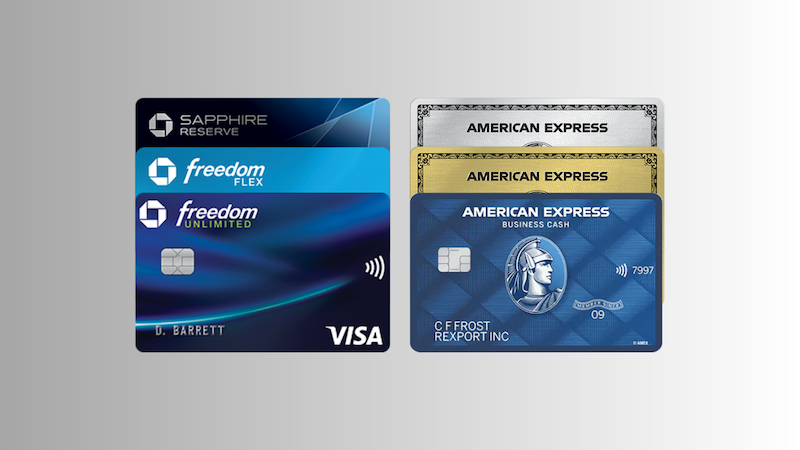
Simply put, a credit card trifecta means securing three cards that, when used correctly, will give you maximum rewards based on how each card is structured and used. Many card issuers offer a trifecta, but we will limit our comparison to two of the most popular trifectas on the market: American Express and Chase.
If you’re only using one card each from either of these issuers, you could be missing out on major credit card rewards.
Let’s look at what both the Chase and Amex trifecta can offer servicemembers.
An Overview of the Chase Trifecta
The Chase trifecta usually consists of the following:
The combined annual fee can be as high as $890 if you include the Chase Ink Business Preferred® ($95 annual fee). However, a more common consumer-focused trifecta—Sapphire Reserve, Freedom Unlimited, and Freedom Flex—totals annual_fees.
Core benefit rewards for the Chase trifecta include:
- 8X points on travel booked through Chase Travel, 4X points on flights and hotels booked directly with airlines or hotel providers, 3X points on other travel worldwide (after the $300 annual travel credit is applied), 3X points on dining at restaurants (including takeout and delivery), and 1X point per dollar on all other purchases with the Sapphire Reserve.
- 5% on rotating quarterly categories (on up to $1,500 spent) and travel purchased through the Chase Ultimate Rewards portal; 3% at restaurants (including takeout and delivery) and drugstores; 1% on all other purchases with the Chase Freedom Flex card.
- 5% cash back on Chase travel purchased through Ultimate Rewards, 3% cash back on dining and drugstore purchases, and 1.5% cash back on all other purchases on the Chase Freedom Unlimited
Other Chase trifecta benefits include:
- $100 Global Entry or TSA credit
- Complimentary access to 1,300+ airport lounges and restaurants with Priority Pass Select
- A DoorDash DashPass for at least one year
Travel transfer partners include:
- Aer Lingus
- Air Canada
- Air France / KLM
- British Airways
- Emirates
- Iberia Plus
- JetBlue
- Singapore Airlines
- Southwest Airlines
- United Airlines
- Virgin Atlantic
- IHG
- Marriott
- World of Hyatt
With the Chase trifecta, you can transfer the points from all three cards to the Chase Sapphire Reserve to redeem them through the Chase Ultimate Rewards portal. Points are worth 50% more when you book through the portal using this card.
» MORE: See the Best Military Credit Cards by Category

Discover the best credit cards for military personnel and veterans. Use our Card Finder tool to easily compare rates, fees, and everyday rewards to find the perfect card for your lifestyle.
An Overview of the Amex Trifecta
The exact cards can vary, but the Amex trifecta commonly consists of the following:
- American Express Platinum Card®
- The American Express® Gold Card
- The Blue Business Plus Credit Card from American Express
For civilian cardholders, the combined annual fee for these three Amex cards is $945.
Core benefit rewards for the Amex trifecta include:
- American Express Platinum Card®: 5X points per dollar spent on eligible airfare (up to $500,000 per calendar year, after that 1X) and eligible hotel purchases, and 1X points per dollar on all other eligible purchases.
- American Express Gold Card: 4X Membership Rewards points at U.S. supermarkets (up to $25,000 per year, after that 1X) and at restaurants, plus takeout and delivery in the U.S., 3X on flights booked directly with airlines or on Amextravel.com, and 1X on all other eligible purchases.
- The Blue Business Plus Credit Card from American Express: 2X Membership Rewards points on everyday eligible business purchases up to $50,000 yearly and 1X points on eligible purchases after that.
Other Amex trifecta benefits include:
American Express Platinum Card®
- $600 Hotel Credit (FHR & THC; THC = 2-night min, prepaid via Amex Travel)
- $200 Airline Fee Credit (select one airline)
- $200 Uber Cash (monthly; U.S. rides/Eats)
- $120 Uber One Credit (auto-renewing membership)
- $300 Digital Entertainment Credit (enrollment; eligible services)
- $209 CLEAR Plus Credit
- $155 Walmart+ Credit (monthly; Plus Up excluded)
- $100 Saks Fifth Avenue Credit ($50 semi-annual; enrollment)
- $400 Resy Credit
- $300 lululemon Credit ($25/mo)
- $200 Oura Ring Credit (+ 6-month membership)
- Up to $300 Equinox Credit (enrollment)
- Access to 1,550+ lounges (Centurion, Priority Pass, Delta Sky Clubs — capped at 10 visits/year unless $75K spend), Marriott & Hilton Gold, Leaders Club Sterling (LHW), Global Dining Access, strong insurances.
American Express® Gold Card
- $120 Dining Credit ($10/mo at select partners, enrollment required)
- $120 Uber Cash ($10/mo for U.S. rides and Eats)
- $100 Resy Credit ($50 semi-annually, enrollment required)
- $84 Dunkin’ Credit ($7/mo at U.S. Dunkin’ locations, enrollment required)
Altogether, the Gold Card adds about $424 in annual credits (Dining, Uber, Resy, and Dunkin’) if fully used, complementing the Platinum’s larger suite of perks.
Blue Business Plus Credit Card from American Express
- $0 annual fee and 2X Membership Rewards points on everyday business purchases (up to $50K/year).
The value of the annual credits can total around $3,900 if fully utilized, which can more than offset the total annual fees for civilian cardholders.
You can also access Centurion and Priority Pass airport lounges, Hilton Honors Gold Status, Marriott Bonvoy Gold Elite Status, a group membership to The Travel Collection, and baggage insurance.
Travel transfer partners include:
- Air France
- AeroMexico
- Air Canada
- Aer Lingus
- All Nippon Airways
- Avianca LifeMiles
- British Airways
- Cathay Pacific Asia Miles
- Delta Airlines
- Emirates
- Etihad Airways
- Hawaiian Airlines
- Iberia Plus
- JetBlue Airways
- Singapore Airlines
- Qantas Airlines
- Virgin Atlantic
The Amex trifecta has the highest ceiling in annual credits (~$3,900 combined), but maximizing them takes more tracking. The Chase trifecta is simpler and more flexible, especially if you want automatic credits and straightforward redemptions.
» MORE: See why the American Express Platinum Card® is our top-pick
Comparing Introductory Bonuses
Amex
American Express Platinum Card®: bonus_miles_full
American Express Gold Card: bonus_miles_full
The Blue Business Plus Card: bonus_miles_full
Chase
Chase Sapphire Reserve: bonus_miles_full
Ink Business Preferred: bonus_miles_full
Chase Freedom Unlimited: bonus_miles_full
» MORE: Best Credit Card Bonus Offers for Military
Amex Trifecta vs. Chase Trifecta Points & Rewards
The Amex Trifecta points and rewards are as follows:
The Platinum Card
- Earn 5X Membership Rewards Points for flights booked directly with airlines or with American Express Travel up to $500,000 on these purchases per calendar year.
- Earn 5X Membership Rewards Points on prepaid hotels booked with American Express Travel.
- Earn 1X Membership Rewards Points on all other purchases.
American Express Gold Card
- Earn 4X Membership Rewards Points at Restaurants, plus takeout and delivery in the U.S.
- Earn 4X Membership Rewards Points at U.S. supermarkets (on up to $25,000 per calendar year in purchases, then 1X).
- Earn 3X Membership Rewards Points on flights booked directly with airlines or on amextravel.com.
- Earn 1X Membership Rewards Points on all other Card purchases.
The Blue Business Plus Card
- Earn 2X Membership Rewards® points on the first $50,000 in purchases per year, then 1 point per dollar after that.
The Chase Trifecta points and rewards are as follows:
Chase Sapphire Reserve
- Earn 8X points on travel booked through Chase Travel.
- Earn 4X points on flights and hotels booked directly with airlines or hotel providers.
- Earn 3X points on other travel worldwide (after the $300 annual travel credit is applied).
- Earn 3X points on dining at restaurants, including eligible delivery and takeout.
- Earn 1X point on all other purchases.
Ink Business Preferred Card (as a potential optional trifecta card)
- Earn 3 points per $1 on the first $150,000 spent on travel and select business categories for each account anniversary year.
- Earn 1 point per $1 on all other purchases – with no limit to your earnings.
- Select business categories include shipping, internet, cable services, phone services, and advertising.
Chase Freedom Flex
- 5X on travel purchased through Chase Ultimate Rewards
- 5X on up to $1,500 in combined purchases in bonus categories like gas stations, grocery stores & select online merchants
- 3X on dining at restaurants, including takeout and eligible delivery services
- 3X on drugstore purchases
- 1X on all other purchases
Chase Freedom Unlimited Card
- Earn 5% cash back on travel purchased through Chase Ultimate Rewards
- Earn 3% cash back on drugstore purchases and dining at restaurants, including takeout and eligible delivery service
- Earn 1.5% cash back on all other purchases
- As part of the Chase-Lyft Partnership, Chase Freedom Unlimited earns 5% back on Lyft purchases until March 2025.
When transferred to third-party loyalty partners, Amex and Chase’s points deliver the highest value. For cardholders who want to redeem their points through the travel portal, Chase points offer an advantage over Amex points. Amex points, on the other hand, shine in transfer redemptions.
Chase and Amex have long lists of transfer partners, but Amex has a longer list and promotions that give you extra on transfers to specific partners.
Chase points are generally easier to redeem at a consistent value — for example, 1 cent per point for gift cards, cash back, or online checkout, and up to 1.5 cents per point when booking travel through the Ultimate Rewards portal with the Sapphire Reserve. Amex points, on the other hand, typically offer 0.6 to 1 cent per point on lower-value redemptions, but can be worth 1.5 to 2 cents or more when transferred to airline partners for premium travel.
However, when it comes to Amex vs. Chase reward points, your travel and spending patterns determine the best reward program for you.
» MORE: The Military Wallet’s best rewards credit cards
Annual Fees for the Amex Trifecta vs. Chase Trifecta
American Express
The American Express Platinum Card® has an annual fee of annual_fees. The first three additional cardholders will cost $195 per year total, and an additional cardholder after the first three will add another $195 per cardholder.
The American Express Gold Card has an annual fee of annual_fees. Additional users are free for the first five cards, then $35 per card for the sixth card onward.
The Amex Blue Business Plus Card has a $0 annual fee, and there is no fee to add additional cardholders.
Chase
The Chase Sapphire Reserve has an annual fee of annual_fees. Cardholders can be added for a yearly fee of $75 per cardholder.
The Chase Freedom Flex does not have an annual fee.
Chase Freedom Unlimited does not have an annual fee.
» MORE: The Military Wallet’s best cash back credit cards
Amex Trifecta vs. Chase Trifecta Pros and Cons
As with all credit cards, you must be responsible with usage and not overextend yourself to earn bonuses and perks. Here’s a quick look at some of the pros and cons of each trifecta to assist you in deciding which one works better for you.
Amex Trifecta Pros and Cons
- Pool Membership Rewards points from multiple cards
- Gain access to luxury travel perks
- Earn bonus points in popular spending categories
- You frequently travel with Amex’s transfer partners
- You are aggressive in using the trifecta’s travel perks
- Your spending habits align with the Amex trifecta’s bonus rewards categories
- High annual fees
- Tracking spending on multiple cards could become confusing
- Excellent credit is required, and approval is not guaranteed
- You must track spending on multiple cards
- You already have a good rewards card from another carrier
Chase Trifecta Pros and Cons
- Pool rewards points from multiple cards
- Gain access to several travel perks
- Earn bonus points in popular everyday spending categories
- Your spending habits align with Chase’s trifecta’s bonus rewards categories
- You frequently travel with Chase’s transfer partners
- High annual fees (on premium cards) if you don’t qualify for MLA/SCRA relief or don’t fully use the benefits.
- Must keep track of multiple cards
- Excellent credit is required, and approval is not guaranteed
- You already have a good rewards card from another carrier
- It does take diligence on your part to figure out the best way to use cards for maximum benefits
How To Create Your Credit Card Trifecta
Although Chase and Amex have two sets of trifecta cards that are the most popular and frequently recommended, you are not locked into only using them if you want to create a trifecta. You may find a better mix of cards if you want to tilt your benefits more toward your business use.
For example, it may make sense to swap out one of the Chase cards for the Ink Business Preferred Credit Card, a great addition to your wallet since it is specifically designed for small business owners.
While that may not make perfect sense if you’re an active duty service member, if you’re a veteran or planning on getting out of the military soon, it’s not too early to start planning with that in mind.
There is no single best Chase or Amex trifecta because each cardholder has different needs based on spending patterns, individual requirements, and budget.
Some people can justify spending habits by adding four cards to create a Quadfecta or only a two-card combination.
You’ll need to think hard about your current and anticipated spending habits and then not only decide which credit card issuer is the most compatible for you but which cards offered by that issuer work best for you as well.
» MORE: Best Chase Credit Cards for Military Members
Which Trifecta Should You Choose?
This is not a small commitment, but if you build your trifecta correctly, you can enjoy considerable benefits with appropriate discipline in credit card usage. The key is to do your homework and match what each issuer offers against how you usually use credit cards.
Using the Chase trifecta makes sense if you want to turn everyday expenses, such as groceries or dining purchases, into valuable travel rewards. That can help you offset typical travel costs, like paying for flights or hotel stays, when you cash in your reward points.
The Amex trifecta can work better for you if you commit you a more aggressive usage of the greater ancillary benefits and if you’re able to earn enough American Express Membership Rewards points to offset any applicable annual fees.
In both cases, you must be diligent in strategically using each set of cards to rack up the most bonus points.
Finally, consider spacing out your applications if you build an Amex or Chase trifecta. Your credit score drops by a few points every time you apply for a new credit card, so waiting 3-6 months between applications may make sense.
However, if you have excellent credit, a high FICO score, and a demonstrated high earning capacity and track record of on-time payments, you can apply for these cards in a shorter timeframe with no significant impacts.