Flying with Pets During a Military PCS: Airline Fees, Rules & Exceptions
Moving with pets during a your next PCS move? Compare airline pet policies, fees, and military travel considerations.

Why trust The Military Wallet? We’re a veteran-founded resource that has helped millions make strong financial decisions.
Advertiser Disclosure: The Military Wallet and Three Creeks Media, LLC, its parent and affiliate companies, may receive compensation through advertising placements on The Military Wallet. For any rankings or lists on this site, The Military Wallet may receive compensation from the companies being ranked; however, this compensation does not affect how, where, and in what order products and companies appear in the rankings and lists. If a ranking or list has a company noted to be a “partner,” the indicated company is a corporate affiliate of The Military Wallet. No tables, rankings, or lists are fully comprehensive and do not include all companies or available products.
The Military Wallet and Three Creeks Media have partnered with CardRatings for our coverage of credit card products. The Military Wallet and CardRatings may receive a commission from card issuers. You can read more about our card rating methodology here.
Opinions, reviews, analyses & recommendations are the author’s alone and have not been reviewed, endorsed, or approved by any of these entities. For more information, please see our Advertising Policy.
American Express is an advertiser on The Military Wallet. Terms Apply to American Express benefits and offers.
It’s already been a journey before you’ve even started. You’ve checked out of temporary lodging, loaded the kids, totes, car seats, suitcases, kennel, passports, and the handful of valuables you’re hand-carrying across the world. The rental car has been returned. The goodbyes have been said.
Then, at the airline counter, one question brings everything to a halt:
“When did your dog get his rabies blood test?”
Unfortunately, the answer was six months too long ago.
For military families preparing for a permanent change of station (PCS), moving a pet often requires far more planning than booking a flight. Depending on the destination, vaccination timelines, import permits, airline restrictions, seasonal embargoes, and limited pet spaces can turn a typical chaotic PCS into a logistically painful house of cards.
And unlike many other aspects of a PCS, military orders do not waive pet-related requirements, fees, or transportation restrictions. In most cases, families are responsible for meeting those requirements and paying associated costs upfront.
Here’s what military families should know before flying with pets during a PCS.
* Please note that for simplicity, this article focuses on dogs and cats, which are the animals covered by most airline policies, destination-country import requirements, and military reimbursement programs.
Sometimes:
The military may reimburse certain pet transportation expenses during a PCS under the Joint Travel Regulations (JTR), but reimbursement is subject to eligibility limits and generally does not cover every expense. Military families remain responsible for meeting airline, veterinary, and destination-country requirements.
What Military Families Should Know Before Flying with Pets
When planning a PCS with pets, think beyond the airline. Before booking travel, ask three key questions:
- What does my destination require?
- How will my pet travel?
- What documentation do I need…and when?
In locations such as Hawaii and Japan, requirements may need to be completed months before departure. Airlines add another layer of complexity, with limited pet reservations and air temperature-related restrictions that can negatively impact available travel options during peak PCS season.
Before finalizing travel plans, verify both your destination’s import requirements and your airline’s pet policies. The two don’t always align, and overlooking either one can create costly delays.
Military Flights vs Commercial Flights
Some military families traveling overseas may be booked on the Patriot Express or Space Available flights, which offer limited pet transportation on select routes. Because pet reservations are not guaranteed and often remain uncertain until close to departure, many families continue exploring commercial airline options as a backup.
OCONUS PCS Moves With Pets
Not all PCS moves are created equal. A family moving from Norfolk to San Diego may only need to reserve a pet space with their chosen airline and obtain a health certificate. A family moving from Norfolk to Okinawa needs months of preparation and carefully coordinated timelines.
While airline policies matter, destination-country requirements often determine whether a pet can travel–and when. Before booking flights, military families should understand the specific entry requirements for their new duty station. Here are some examples:
Hawaii
Because Hawaii is the only rabies-free state in the nation, dogs and cats entering the islands must meet specific requirements before arrival.
To qualify for Hawaii’s Direct Airport Release program and avoid quarantine, pets must be microchipped, have documentation of at least two rabies vaccinations administered more than 30 days apart, and pass an approved rabies antibody (FAVN) test. The blood sample must be tied to the pet’s microchip number.
Families must also submit paperwork and fees before arrival. As of publication, the Direct Airport Release fee was $185 per pet.
The most common mistake made by families heading to Oahu is underestimating the time it takes to process these requirements. Missing a waiting period or paperwork deadline can result in additional quarantine requirements and fees. When in doubt, work backward from your anticipated arrival date rather than your departure date. While military orders do come at the last minute, being aware of requirements in advance is advised.
Japan
Japan is considered one of the most challenging PCS destinations for pet owners, but its requirements are clearly documented by the Animal Quarantine Service.
To bring a cat or dog into Japan without an extended quarantine period, pets must be microchipped, receive two qualifying rabies vaccinations, complete an approved rabies antibody (FAVN) test, and satisfy a 180-day waiting period before arrival. As with Hawaii, the order matters. The microchip must be implanted before the rabies vaccinations and antibody test are completed, and the test results are tied to that specific microchip number.
Japan also requires advance notification at least 40 days before arrival. Families must submit documentation to the Animal Quarantine Service and receive approval before their pet enters the country. Pets that arrive before completing the required 180-day waiting period, or with incomplete documentation, may be required to complete the remainder of that period in quarantine. The location of that quarantine depends on the family’s circumstances and guidance from the Animal Quarantine Service.
The 180-day waiting period can complicate PCS timelines, particularly when orders arrive with less than six months’ notice.
When orders to Japan arrive, pet planning should move to the top of the PCS checklist.
Other Common OCONUS Destinations
South Korea: Pet import requirements are generally less restrictive than those in Japan, but families must still comply with vaccination, microchipping, and health documentation requirements. One advantage is the absence of Japan’s 180-day waiting period, allowing many pets to travel once testing and paperwork requirements have been met.
Guam: Although Guam is a U.S. territory, military families should not assume moving a pet there is as simple as a stateside PCS. Like Hawaii, Guam is rabies-free and requires pets to meet specific import requirements before arrival. The greater challenge is often transportation, as limited airline options can make pet reservations difficult to secure during peak PCS season.
Europe and the United Kingdom: Pet import requirements are generally less restrictive than those in Hawaii, Japan, or Guam, but rules vary by country. Many common military duty stations in Europe—including Italy, Germany, and Spain—require pets to be microchipped and vaccinated against rabies before entry. The United Kingdom follows its own pet travel rules, making it important for families to verify destination-specific requirements before making travel arrangements.
Families can research destination-specific requirements through the USDA APHIS Pet Travel website, which provides guidance for pets traveling from the United States to individual countries.
Also, don’t forget that you will have to fly your pet home, and the U.S. has its own reentry policies to keep in mind.
Cabin vs Cargo Pet Travel
In-Cabin Travel
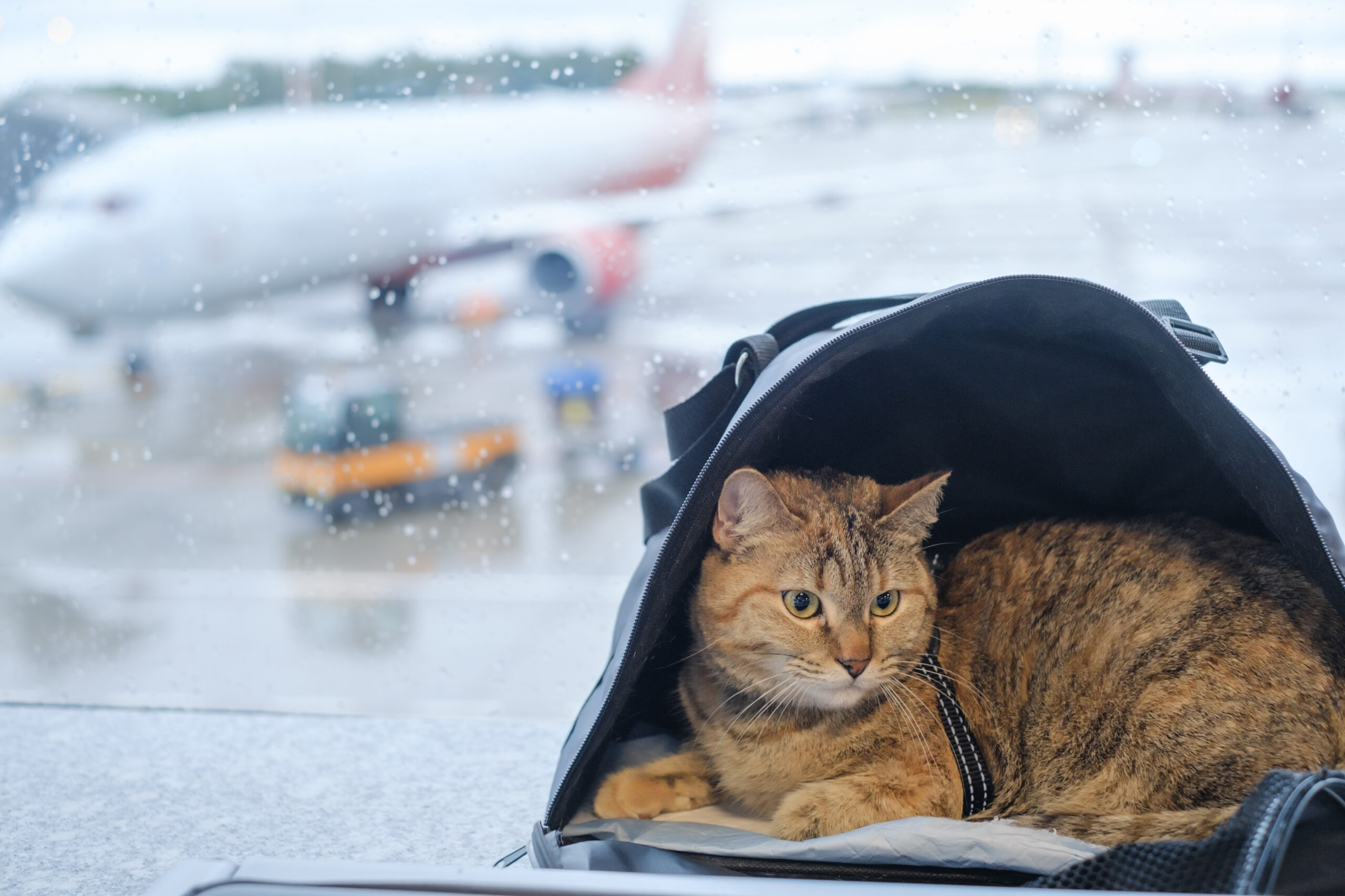
For many military families, getting a pet into the cabin is the preferred option. Small dogs and cats may be allowed to travel under the seat in front of their owner if they meet the airline’s size and weight requirements.
The challenge is availability. Most airlines only allow a limited number of pets in the cabin on each flight, and those spots can fill quickly during peak PCS season. Some international routes do not permit in-cabin pet travel at all.
Cargo Travel
Cargo transportation is often the only option with larger dogs, especially during an OCONUS PCS.
That option comes with additional requirements, including kennel standards, weather restrictions, breed limitations, and routing considerations, as not all routes accept pet travel. Families should review airline policies carefully, as these factors can affect both travel dates and available flight options.
Seasonal Embargoes and Breed Restrictions
One of the most frustrating aspects of PCS pet travel is that availability can change based on the weather.
Many airlines restrict or suspend pet transportation during periods of extreme heat or cold, often during the same summer months when military families are moving. A flight that works for the family may not be available for the family pet.
Breed can also affect travel options. Snub-nosed, or brachycephalic, breeds such as bulldogs, pugs, boxers, and Persian cats may face additional restrictions or be prohibited from traveling in cargo because of increased respiratory risks.
Before booking flights, verify both weather-related policies and any breed-specific restrictions that could affect your travel plans.
Which Airlines Offer Military Pet Exceptions or Discounts?
Policies, fees, and military exceptions change frequently. The chart below provides a snapshot of major airline policies as of publication, but families should always verify requirements directly with the carrier before booking travel.
| Airline | Cabin Pets | Cargo/Checked Pets | Military Exception? |
| American Airlines | Yes, on eligible routes, $150 each way | Yes, but checked pets are generally limited to personnel traveling on orders. | Yes. Checked pet option for military on orders; cargo discounts available. |
| Delta | Yes, on eligible routes, $150 for domestic flights and $200 each way for most international flights | Yes, animals are accepted as checked baggage for travelers on orders | Yes, a military pet program. |
| United | Yes, on some routes. $150 fee each way | Yes, Military/State Dept. exceptions only | Yes, limited PCS-related exceptions |
| Alaska | Yes, on some routes. $100 fee each way | Yes. Active-duty U.S. Military and dependents on travel orders may pay the discounted fee of $100 each way per kennel (usually $150). Fees increase to $340 for active-duty personnel on orders traveling between Seattle and Narita (check current prices with Hawaiian Airlines). | No specific PCS waiver identified; verify at booking |
| Southwest | Yes, on some routes. $125 fee each way | The airline does not offer cargo, checked, or international pet transport options. | No military pet waiver identified |
How Much Does Flying with a Pet Cost Military Families?
Please note, these are planning ranges, not quoted prices.
| Expense | Typical Cost |
| Airline Pet Fee | $100–$200+ |
| Health Certificate | $75–$300 |
| Rabies antibody (FAVN) testing | $100–$300 |
| Travel crate/kennel | $50–$500 |
| Pet shipper | $2,000–$8,000 |
| Quarantine or import fees | Varies by destination |
The total cost of moving a pet during a PCS can vary dramatically depending on destination, airline availability, pet size, and whether professional transportation assistance is needed.
A family flying a cat from Virginia to Florida may spend only a few hundred dollars. A family moving a large dog overseas could easily spend several thousand dollars once airline fees, testing, veterinary appointments, crates, and import requirements are added together.
The good news is that some military families may qualify for reimbursement of certain PCS-related pet transportation expenses.
Military Reimbursement for Pet Expenses
Before the military expanded reimbursement options in 2024, responsibility for pet transportation costs fell largely on military families. This changed when new authorities expanded reimbursement options for certain pet transportation expenses.
Under current Joint Travel Regulations (JTR), servicemembers may be reimbursed for qualifying expenses associated with relocating one household pet during a PCS.
For CONUS moves, reimbursement is generally capped at $550 per move. Eligible expenses may include mandatory microchipping, boarding fees, hotel pet fees, licensing costs at the new duty station, and pet transportation costs when a pet flies or is shipped separately from the servicemember.
For OCONUS moves, reimbursement may be available for a broader range of expenses, including mandatory microchipping, quarantine fees, rabies antibody testing, boarding fees, hotel pet fees, licensing costs, and pet transportation. Reimbursement is generally capped at $2,000 per overseas PCS.
In certain situations where Patriot Express capacity and commercial airline options are unavailable, military departments may approve reimbursement above the standard cap. Eligible servicemembers assigned to specific overseas locations may receive reimbursement of up to $4,000 for qualifying pet transportation expenses. The servicemember must be PCSing FROM countries designated by the CDC as high-risk for dog rabies to receive the transportation reimbursement.
Families should keep detailed records and receipts for all pet-related expenses and consult their transportation office before making travel arrangements. Reimbursement can provide meaningful relief, but it is best viewed as a way to offset costs rather than cover them completely. Depending on the destination, airline availability, and number of pets involved, families may still face significant out-of-pocket expenses during an overseas PCS.
Alternative Pet Transportation Options
Pet Relocation Services
Professional pet relocation companies coordinate many of the logistics associated with pet travel, including documentation, flight arrangements, import requirements, and destination-country compliance.
These services can be helpful for complex OCONUS moves involving quarantine requirements or strict import timelines.
Ground Transportation
For many CONUS PCS moves, driving is often the simplest option. It allows pets to remain with their owners throughout the trip while avoiding airline restrictions and scheduling challenges.
Family Escort Arrangements
When airline pet spaces are unavailable, some servicemembers have a spouse, friend, or relative escort the pet separately.
While not always ideal, these arrangements can help military families overcome limited airline availability during peak moving seasons or temperature limitations in the summer.
Common Mistakes Military Families Make when Flying with Pets
Most PCS pet travel problems can be traced back to a handful of avoidable mistakes:
- Assuming a pet can be added to a reservation after flights are booked.
- Waiting too long to reserve a pet space.
- Starting OCONUS paperwork after receiving flight dates.
- Focusing on airline requirements without researching destination-country regulations.
- Missing documentation deadlines or required waiting periods.
- Failing to develop a backup transportation plan if flights change or pet spaces become unavailable.
Tips for Reducing PCS Pet Travel Stress
- Start researching requirements as soon as PCS orders are received.
- Reach out to your sponsor or families who have recently completed the same move for destination-specific advice.
- Work backward from the pet’s arrival date rather than the family’s departure date.
- Reserve airline pet space as early as possible.
- Acclimate pets to their travel carrier well before moving day.
- Discuss travel plans with a veterinarian, particularly for older pets or animals with medical concerns.
- Build flexibility into travel plans whenever possible.
- Plan on being at the airport for a long time. Airline officials will inspect your documents, crates, and pet before approving them to fly.
Pro Tip: Be prepared to take your pet out of their crate at the airport. If your cat is prone to bolting and you have a toddler in tow, know that you will be responsible for holding your pet (and your toddler) without the promise of being in an enclosed environment. Losing your pet at the airport is no way to start a PCS, so plan ahead.
FAQs: Flying With Pets During a Military PCS
Does the military pay to fly your pet during a PCS?
Sometimes. Under the Joint Travel Regulations (JTR), servicemembers may be reimbursed for certain pet transportation expenses, generally capped at $550 for CONUS moves and $2,000 for most OCONUS moves, depending on eligibility and orders.
Can pets fly on Patriot Express flights?
Yes, but space is limited and not guaranteed. Pet reservations often fill quickly, so families usually need backup commercial travel plans.
Can military pets fly for free?
No. Military orders do not waive airline pet fees or destination requirements. Some airlines offer limited military programs, but families typically pay upfront and may later seek reimbursement for eligible costs.
Can large dogs fly during a military PCS?
Yes, but most large dogs must travel in cargo. Cargo travel is subject to airline rules, weather restrictions, kennel requirements, and breed limitations.
How early should I start preparing my pet for an OCONUS PCS?
As early as possible, often 6+ months ahead for some destinations. Countries like Japan and Hawaii require long timelines for vaccinations, testing, and waiting periods.
What documents are required to fly with a pet during a PCS?
Requirements vary but may include rabies vaccination records, a health certificate, microchip documentation, and destination-specific import paperwork.
Can my pet fly in the cabin during a PCS?
Yes, for small dogs and cats that meet airline size limits. However, space is limited and not all international routes allow in-cabin pets.
What should I budget for moving a pet during a PCS?
Costs range from a few hundred dollars for CONUS moves to several thousand for overseas PCS moves, including airline fees, vet care, testing, crates, and possible relocation services.
Bottom Line
Moving a pet during a PCS requires more planning than many families expect. Airline policies, destination-country regulations, and transportation availability can all affect when and how a pet travels. Starting early, understanding the requirements, and building flexibility into the process can help ensure both your family and your pet arrive safely at the next duty station.