Overseas Car Insurance: What Military Members Need to Know
Service members stationed OCONUS have to navigate driving and overseas car insurance.

Why trust The Military Wallet? We’re a veteran-founded resource that has helped millions make strong financial decisions.
Advertiser Disclosure: The Military Wallet and Three Creeks Media, LLC, its parent and affiliate companies, may receive compensation through advertising placements on The Military Wallet. For any rankings or lists on this site, The Military Wallet may receive compensation from the companies being ranked; however, this compensation does not affect how, where, and in what order products and companies appear in the rankings and lists. If a ranking or list has a company noted to be a “partner,” the indicated company is a corporate affiliate of The Military Wallet. No tables, rankings, or lists are fully comprehensive and do not include all companies or available products.
The Military Wallet and Three Creeks Media have partnered with CardRatings for our coverage of credit card products. The Military Wallet and CardRatings may receive a commission from card issuers. You can read more about our card rating methodology here.
Opinions, reviews, analyses & recommendations are the author’s alone and have not been reviewed, endorsed, or approved by any of these entities. For more information, please see our Advertising Policy.
American Express is an advertiser on The Military Wallet. Terms Apply to American Express benefits and offers.
Great news! You’ve just received orders for an overseas assignment. Among the many decisions you will have to make is how to start driving in a foreign country. Take it from me, navigating country-specific insurance rules can be confusing and brings up several questions. How do I get overseas military car insurance? What happens to my U.S. auto insurance policy while I am out of the country? Do I ship my car? If so, what does that involve? Do I buy a car when I get there?
Not sure what to do? No worries! Been there — done that.
In this article I will clear up any confusion about how military car insurance overseas works, and provide tips on host-nation insurance requirements, shipping your Privately Owned Vehicle (POV) overseas, what to do with your car if you need to store in stateside, and how insurance works if you have to rent or drive a car in the U.S. while on leave, or temporary duty.
This information will help you navigate Outside the Continental U.S. (OCONUS) auto insurance so you can enjoy all that an overseas duty assignment has to offer.
Do I Need U.S. Auto Insurance Overseas?
Once you leave the country, your U.S. auto insurance policy may not be valid. Vacationers are advised to get travel insurance with auto coverage. But as someone who is going to spend significant time abroad, you will need a separate policy. Fortunately, if you PCS to a country with a large U.S. military presence, you can often obtain international auto insurance through military-friendly insurers. For cases where an international policy is not recognized, you may need to get host-nation-specific auto insurance.
Overseas Auto Insurance
Overseas military car insurance coverage options vary by country, but your policy must meet local legal requirements. Companies like USAA, GEICO (through local affiliates), and Clements Worldwide (now Gallagher) offer car insurance solutions designed for military members stationed in the United Kingdom, Spain, Germany, Japan, and South Korea, to name a few. They will be able to tell you the available insurance options for your PCS destination. You will want to check with your current car insurance company and even shop around to see if they offer international insurance, and what international coverage they offer, if any.
Host-Nation Auto Insurance
If you can’t get international insurance, or the Third-party Liability (TPL) coverage does not meet legal requirements for that country, you will have to get host-nation auto insurance. This is not an issue because most overseas installations allow local insurance agents to have an office on-base or have an office right outside of the gate. Haven’t arrived yet and want to plan ahead? Military OneSource provides insurance requirements for many OCONUS duty stations.
I have experience in navigating both cases. On my tour in the UK, I purchased a car from a departing military member (Lemon Lot) and dealt with a host-nation insurance dealer who had an office on base. On a tour in Japan, I opted for an international insurance policy through USAA, which was seamless and convenient.
Understanding Status of Forces Agreements (SOFA) and Insurance Requirements
Status of Forces Agreements (SOFA) are international treaties that outline the legal status of U.S. military members, civilian employees, contractors, and sponsored family members while living or working in a foreign country. These agreements have several parts, such as legal jurisdiction, taxation, and insurance requirements. Here are some key aspects of SOFAs that pertain to OCONUS vehicle insurance requirements:
Mandatory Liability: Even though you or your family may be covered by a SOFA, you are still required to have liability insurance that meets host nation and U.S. military installation laws. These limits often exceed what is required in the U.S. or covered in an international insurance policy.
Minimum Coverage: Specific amounts will vary by country, but countries often require minimum car insurance coverage for both liability and property damage when driving both on and off base.
Here are some examples of standard overseas military car insurance requirements for major military host nations, as of March 2026:
| Country | Legal Minimums & Primary Requirements |
| Germany | Third-party Liability: €7.5M ($8M) for bodily injury; €1.22M ($1.4M) for property damage; €50K ($58K) for financial losses Source: insurancegermany.com |
| Japan | JCI (Japanese Compulsory Insurance) Covers bodily Injury up to ¥30M yen ($188K); PDI (Property Damage Insurance) ¥3M ($19K) for property and ¥30-¥40M ($188-$250K) for bodily injury/death Source: Chubb Insurance (USAA Affiliate) |
| South Korea | Third-party Liability: ?120M ($90K) for bodily injury or death per person; ?10M ($7.5K) for property damage Source: Eighth Army Note: It is recommended to get unlimited bodily injury coverage. |
| United Kingdom | Third-party Liability: Unlimited coverage for personal injury to third parties and a minimum of £1.2M ($1.6M) for property damage Source: Turo |
What If I Have to Return to the U.S. on Leave or Temporary Duty?
Many military members stationed overseas come back to the states for training, conferences, or just to take leave. That’s not a problem. Insurance companies like USAA have “U.S. Touring Policies” that cover you if you borrow or rent a car in the states. This is helpful because it prevents a gap in your car insurance coverage history. This policy is usually liability-only and usually does not include comprehensive or collision coverage. Often, it is only available to you if you cancel your U.S. car insurance policy and have no vehicles in the U.S. Fortunately, touring coverage can be very reasonable.
Another option is to take out a non-owner car insurance policy that is a liability-only policy that covers bodily injury and property damage and serves as secondary coverage when renting or borrowing a car. This type of policy is also reasonable, but more expensive than USAA’s Touring Policy.
Pro Tip: If you are on official orders back in the states, you can take advantage of the U.S. Government Rental Car Program, which includes free liability insurance.
Shipping Your Vehicle Overseas
Shipping your POV overseas is a multi-step process, but if you just follow some simple rules, you will get through it with no problems. First, you must be entitled to ship your POV overseas at government expense. Unsure if you are eligible? Check your PCS travel orders. When I was assigned to the U.S. Embassy in Ethiopia, I was allowed to ship my car because we were not allowed to purchase a car locally.
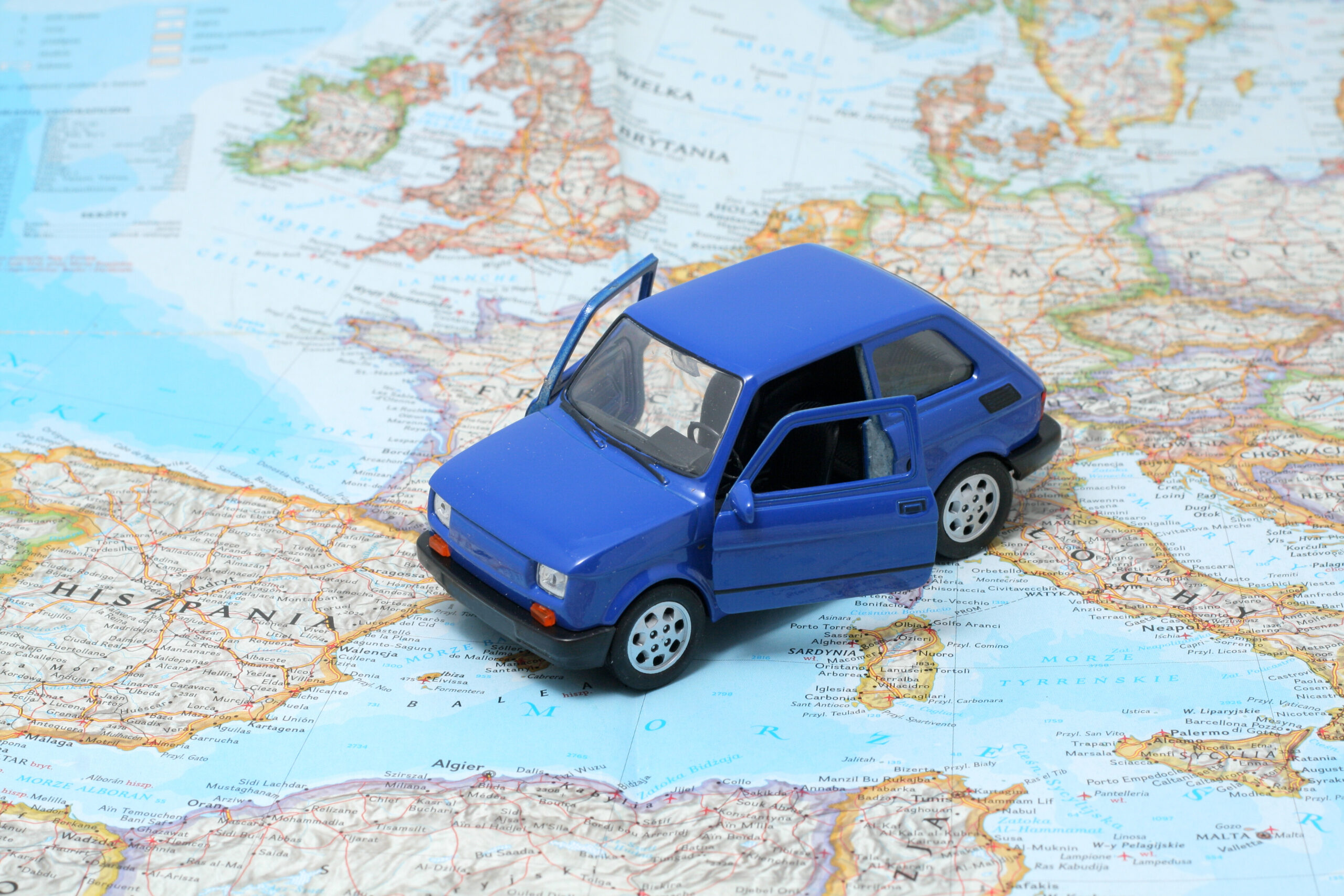
Even if you are authorized to ship your POV, it may be a better option to buy a used car at your duty station, and either sell your car before you depart or put it in long-term storage. For example, if you are moving to England or Japan, remember, they drive on the left. I was foolish enough to buy a Fiat (steering wheel on the left) from a friend during my tour in England, and regretted it every time I had to pass a car.
Once you have made the decision and are authorized to ship your car, you will have to ensure you follow all military, Department of Agriculture (USDA), and host-nation guidelines to get your car from the U.S. to your overseas duty station.
How Do I Ship My Car Overseas?
The process to ship your POV overseas has become simpler and more streamlined over the years. Here is a step-by-step guide to shipping your POV overseas.
Eligibility
- Make sure the entitlement to ship your car is on your PCS orders
- Confirm your vehicle meets the size specifications (less than 20 metric tons)
- Go to PCSmyPOV to find the nearest Vehicle Processing Center (VPC) and schedule a drop-off appointment
Gather documentation for your VPC appointment
- PCS Orders
- Proof of Ownership or lienholder authorization if it is financed or leased
- Military ID and passport
- Recall printout to show there are no open safety recalls
Prepare your POV for shipment to prevent being rejected at the VPC
- Make sure the fuel level is ¼ of a tank or less
- Ensure:
- It is “USDA Clean” to prevent the spread of invasive species
- There are no personal items, toll tags, or parking passes in the vehicle
- Alarm systems are disabled
- It is mechanically sound and safe, with no leaks
Arrival and pick up
- Depending on the destination, it may take 30 to 60 days to ship your POV. You can track the status of your vehicle on PCSmyPOV.
- The destination VPC will let you know when your POV is ready for pickup
- Make sure you conduct a thorough inspection upon pick-up and compare it to your pre-inspection report (DD Form 788). Report any new damage immediately to file a claim.
How Do I Insure My POV During Shipment?
There are several layers of protection for your POV during transit:
Carrier Liability: The designated government-contract carrier is legally responsible for your vehicle during the trip (capped at $20K). You can settle minor damage immediately with the carrier, or you have 180 days to report significant damage through the formal claim process.
Your Auto Insurance: Don’t cancel your U.S. car insurance when you drop off your car at the VPC! It’s recommended to keep comprehensive and collision coverage until you take delivery overseas. You may be able to get an in-transit rate from your insurance company, which could lower your premiums.
Supplemental Marine Insurance: If you have a high-value car, you can buy Ocean Marine (transit) insurance to cover the full value of your car.
What Happens to My U.S. Insurance Policy While Overseas?
You have several options available to manage your U.S. car insurance policy while you are living overseas:
- Cancel your U.S. policy: You can cancel your auto policy completely. This will create a lapse in coverage, which may lead to higher premiums when you return and restart your auto insurance. Be sure to check with the state that issued your license, as some mandate continuous coverage. Not having coverage could result in a fine or the suspension of your license.
- Switch to a non-owner policy or touring policy: This will provide you with liability coverage so you can drive a rented or borrowed car if you come back to the U.S. temporarily while still stationed overseas.
- Reduce your coverage: Keeping just comprehensive coverage means lower monthly rates while you are overseas.
- Suspend your policy: If you are going on a deployment of less than six months, you may be able to temporarily suspend your car insurance policy and file an affidavit of non-use with the DMV. This will ensure you do not have a coverage lapse.
Storing a Vehicle in the United States
If you aren’t taking your car overseas and don’t want to sell it, then storing your car is a great option. That requires you to find a secure facility and ensure you have vehicle insurance while you are out of the country. Most leading companies offer storage-only comprehensive coverage to protect against damage to your car while it is in storage.
You may have to notify your state’s DMV to avoid registration suspension since you won’t have liability insurance. Also, if your car is still financed, your lender may require you to keep full coverage.
Pro Tip: According to U.S. Transportation Command, you can get reimbursed for storing a POV in a commercial storage facility if transportation is not permitted due to the country, area, U.S. laws, regulations, or you are on a TDY for more than 30 days supporting contingency operation, humanitarian assistance, or other declared emergency operations.
Storage Facility Options
Here are the leading choices when choosing a long-term storage facility for your car:
Commercial Self-Storage: Indoor units that give you the best overall protection from weather and theft. If you get a unit that is climate-controlled, you can prevent mold, rust, and damage to your car’s electronics systems. Some of these companies also offer maintenance services, such as tire pressure checks and regular vehicle starting. You will pay a premium price for this option. The average price for an indoor climate-controlled unit is between $150 to over $400 per month.
Military Base Storage: Some bases offer long-term parking lots and offer very reasonable monthly rental rates. Depending on the installation, your options vary from indoor, outdoor, or covered storage. The average price depends entirely on location. According to SpaceWise, you can pay anywhere from $150 to over $300 per month.
Covered and Uncovered Vehicle Storage Units: Renting a parking space at a self-storage facility is a more affordable option. You will just need to decide if you want to have your POV protected from the elements. These options may not be the best options for long-term storage needs. For a covered parking spot, look to pay between $150 and $250 per month, and for an uncovered spot, prices run from $50 to $150.
Home Garages/driveways/carports (family or friends): This is the most economical option, but has several drawbacks, such as theft, damage, pest infestation, and/or deterioration. This all depends on how diligent your family or friend is in watching out for your car.
No matter what option you choose, make sure that you take preventive measures to protect your car while you are away. One idea is to have a professional prepare your car for long-term storage.
Note: Source for the commercial storage rates came from RecNation. Prices were valid as of the time of publication (March 2026) and vary by market.
Car Storage Insurance Requirements
Nearly all facilities require you to keep your POV insured. Insurance companies do offer coverage specifically for stored vehicles, with some offering significant discounts for military members. For example, USAA offers up to a 60% discount on premiums in long-term storage if it is stored in a secure facility, or in covered storage on a military installation.
Bottom Line
Your existing U.S. auto policy will not be valid for driving your POV overseas, so you will need to get a new overseas military car insurance policy. And navigating auto insurance OCONUS will require you to become familiar with your new duty station’s laws and policies. Getting insured overseas is certainly a new process, but luckily, it’s not a difficult one.