COVID-19 Medical Resources for Servicemembers
Government agencies provide COVID-19 medical resources and guidance for servicemembers to improve force readiness and community wellbeing.

Why trust The Military Wallet? We’re a veteran-founded resource that has helped millions make strong financial decisions.
Advertiser Disclosure: The Military Wallet and Three Creeks Media, LLC, its parent and affiliate companies, may receive compensation through advertising placements on The Military Wallet. For any rankings or lists on this site, The Military Wallet may receive compensation from the companies being ranked; however, this compensation does not affect how, where, and in what order products and companies appear in the rankings and lists. If a ranking or list has a company noted to be a “partner,” the indicated company is a corporate affiliate of The Military Wallet. No tables, rankings, or lists are fully comprehensive and do not include all companies or available products.
The Military Wallet and Three Creeks Media have partnered with CardRatings for our coverage of credit card products. The Military Wallet and CardRatings may receive a commission from card issuers. You can read more about our card rating methodology here.
Opinions, reviews, analyses & recommendations are the author’s alone and have not been reviewed, endorsed, or approved by any of these entities. For more information, please see our Advertising Policy.
American Express is an advertiser on The Military Wallet. Terms Apply to American Express benefits and offers.
Face Mask Guidance
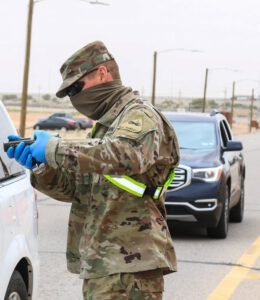
Per Army guidance, soldiers are authorized to wear the neck gaiter and other cloth items, such as bandanas and scarves, as face coverings. (Photo Credit: Army)
COVID-19 Medical Resources
Active duty servicemembers and their families should contact their installation medical facility if they are feeling ill. This guidance also applies to retirees who have access to a military medical facility. If a servicemember is concerned they might have COVID-19, the DoD recommends exploring the Military Health Service Nurse Advice Line website. The Advice Line is currently experiencing delays and wait times due to COVID-19. Video and webchat are limited. During this call, servicemembers and their families can speak directly with a registered nurse who can offer individual guidance on the next best steps. To help limit medical staff exposure and prevent overloading military medical facilities, several installations have stopped seeing family members and retirees. If this is the case in your installation, follow your chain of command guidance on where to go to seek treatment. Please note that some facilities no longer offer medical resources for retirees and family members. This change in access occurred prior to the COVID-19 pandemic. Here is a current list of all military clinics that are only providing appointments for active duty servicemembers. If a military family member demonstrates a need for COVID-19 testing, consult Tricare’s FAQ page for more information. Your medical provider will determine whether or not you need to be tested.What If I Test Positive for COVID-19?
When a servicemember or someone in their immediate household tests positive for COVID-19, CDC guidelines on self-isolation should be followed unless you require medical attention. Contact your medical provider for specific instructions. When a servicemember tests positive at a Military Treatment Facility (MTF), the MTF notifies local, state, and installation officials. The lead military public health investigator then contacts affected individuals, interviews them, and provides individual guidance.Pharmacies and Medications
Current guidance indicates that Tricare users should be prepared to see their pharmacies close as a result of the pandemic. The Defense Health Agency (DHA) guidance implies that family member and retiree medical resources could be put on hold temporarily as on-installation pharmacies are directed toward COVID-19-related efforts. DHA continues to evaluate the conditions on each installation and might present alternatives like curbside pickup or the temporary transfer of medications to a civilian pharmacy. For the latest information, visit the DHA website.Veterans – Medical Resources
Some VA facilities are currently experiencing higher than average calls relating to questions about COVID-19. As the situation continues to evolve, veterans are encouraged to first visit the VA’s website and FAQ page. Veterans should see their doctor or visit the VA medical facility if they are in the VA healthcare system. The VA has activated the emergency management coordination cell to start clinical screenings at all facilities. More information on the VA’s response can be found here.Mental Health & Well-Being
This can be a trying time for many members of the military community. It is just as important to take care of your mental health as taking care of your physical health. To help with this, there are several programs that might be useful for service members and their families. These include the following.- Military Family Life Counselors (MFLC) – provide non-medical, short term, problem-solving for service members and their families.
- Mental health & wellness options for veterans.
- On-call duty Chaplain service – The religious support office at any installation is on call after duty hours for emergencies. Most offices rotate chaplains weekly.
- Stop-Movement Customer Assistance Point (SM-CAP) – Available at some OCONUS installations to help assist with questions relating to the Stop Movement order. SM-CAP provides accurate and up to date information relating to a stopped PCS. This access point can also offer resources for dealing with stress relating to the impact of COVID-19.
Where to Get More Information
For the most current information and updates about the Coronavirus, the DoD recommends servicemembers and families visit the CDC website. The World Health Organization also offers up-to-date information that can be accessed here. *The information above is pulled from professional medical resources, but TheMilitaryWallet.com does not offer professional medical advice.